Shopify Price Testing: What to Test, What to Avoid, and How to Do It Without Breaking Trust


Price testing can unlock Shopify revenue instantly.
It is also the fastest way to lose customer trust if you get it wrong.
Between product pages, checkout, ads, and feeds, a single pricing experiment can ripple further than most teams expect.
This guide breaks down what’s worth testing, what to avoid, and how to design Shopify price experiments that inform pricing decisions without creating unnecessary legal, ethical, or reputational exposure.
Shopify Price Testing at a Glance
Is Shopify price testing legal?
Generally, yes, provided pricing isn’t based on protected attributes, prices are transparent before purchase, and personal data isn’t used without consent.
Is it ethical?
It depends on how it’s done. Large price gaps, hidden tests, and unclear rules tend to erode trust. Transparent cohort or tier testing carries less risk.
When does price testing make sense on Shopify?
When you’re validating value after a product change, re-earning product-market fit, or refining packaging and tiers. It’s a poor substitute for fixing positioning or demand.
How should Shopify teams test price responsibly?
Start with research to define a realistic price range, keep deltas reasonable, plan remediation upfront, and track downstream signals beyond conversion.
What Is Shopify Price Testing?
Shopify price testing is the practice of exposing different visitors or cohorts to different prices, pricing structures, or price-related rules to understand how those changes affect behavior.
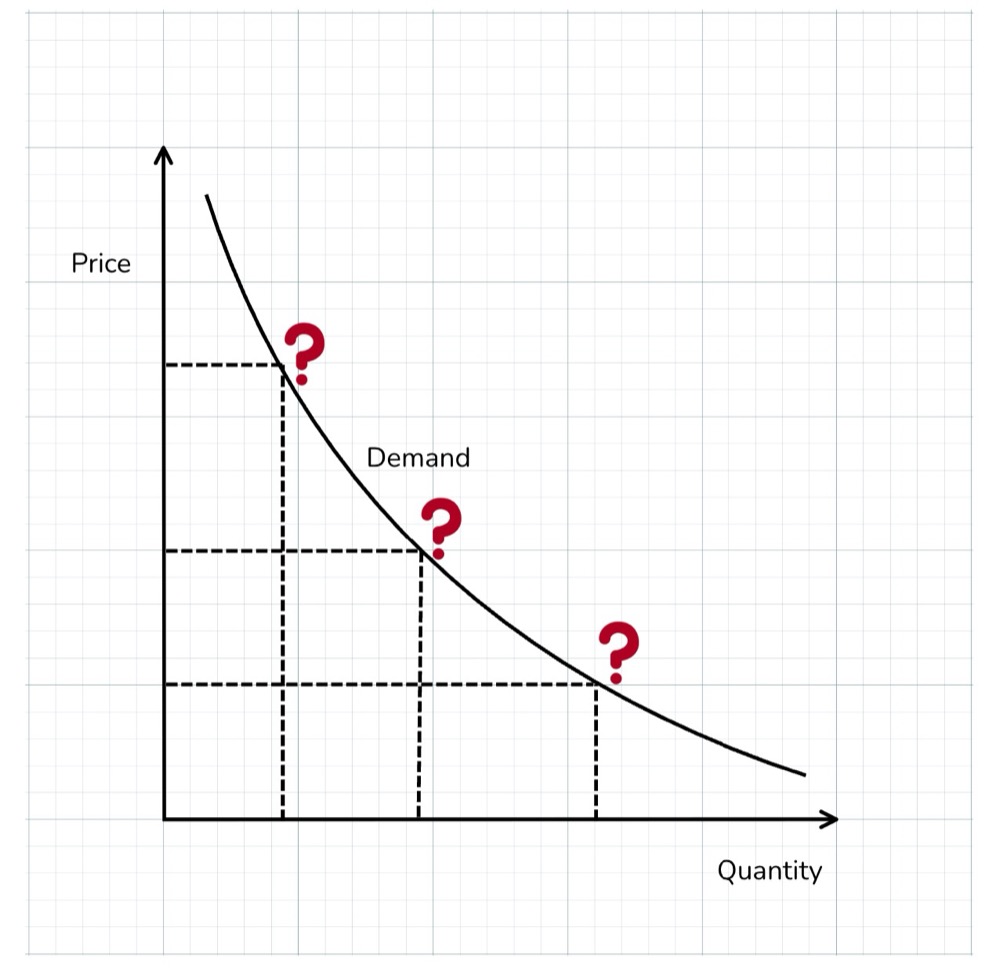
This usually shows up in a few different ways. You could:
- Test two or more price points for the same product
- Test different subscription prices or billing cadences
- Test tiered pricing structures or bundles
- Test discounts, offers, or price framing while keeping the list price fixed
What makes Shopify price testing distinct is where the price change propagates.
A pricing experiment doesn’t live on a single page. It flows through product detail pages, carts, checkout, analytics, ads, and sometimes third-party feeds. That makes pricing experiments more visible, more sensitive, and harder to unwind than most UX or copy tests.
Price Testing vs. Pricing Strategy
A pricing strategy refers to the approach you use to set prices for your products or services. It defines how you capture value over time and shapes how prices relate to cost, perceived value, customer segments, and long-term growth.
Price tests help you validate the assumptions that inform the strategy. Price testing is an input, while pricing strategy is a system.
That distinction matters. Without it, teams often resort to price tests to compensate for deeper issues like unclear positioning, weak demand, or packaging that doesn’t align with how customers buy.
In those cases, the test may “win” short-term while core issues remain ignored and downstream problems worsen.
Your pricing is the exchange rate on the value you’re creating in this world.
Patrick Campbell, Founder of ProfitWell and Strategy Advisor at Paddle
When Does Price Testing Make Sense on Shopify?
Teams rarely test price for the sake of the number itself. They’re usually trying to answer one of the following questions:
- Are we underpricing the value we’re delivering?
- Would customers still convert at a higher price?
- Which tier or bundle makes the most sense for our audience?
- Are discounts doing real work, or just training customers to wait?
Price testing becomes the tool of choice because it feels decisive. You change the number, watch what happens, get an answer. And in between it all, fingers crossed that nothing unpleasant hits the fan.
On Shopify, where purchase cycles are short and revenue attribution is direct, that feedback loop can feel especially compelling.
The catch is that price is a blunt instrument. It can surface demand signals, but it also introduces risks that rarely show up in a conversion report: confusion, perceived unfairness, downstream trust erosion, and operational fallout across checkout, support, and retention.
Price testing earns its place when it helps you answer a specific question about value, demand, or packaging, and when Shopify’s mechanics won’t distort the signal you’re trying to measure.
More specifically, here are prime situations where price testing is a reasonable move:
1. Validating Value After a Meaningful Change
Price tests make sense after something substantive has changed:
- You’ve added or removed features.
- You’ve expanded into a new customer segment.
- Your costs or margins have shifted.
- You’ve reworked bundles, tiers, or subscription cadence.
In these cases, instead of guessing at a number, you’re checking whether the price still reflects the value customers perceive.
2. Operating in a Fast Purchase Cycle
For many Shopify stores, especially DTC:
- Purchase decisions happen in a single session
- Intent is clear and immediate
- Revenue can be attributed directly to the price a visitor sees
That makes price testing more feasible than in B2B environments with long sales cycles, multiple decision-makers, and delayed revenue signals.
Provided traffic volume is sufficient and the test is designed carefully, you can often reach reliable directional insights faster.
3. Testing Within a Narrow, Research-backed Range
Price testing works better (and is less risky) when you’re choosing between reasonable options rather than searching for a ceiling.
If research has already defined a viable price interval—through customer surveys, willingness-to-pay studies, or historical sales data—price testing can help you fine-tune where you land within that range.
For example, a DTC subscription brand might learn from surveys and past promotions that their customers are comfortable paying between $35 and $45 per month. A live test between $39 and $43 then helps clarify where perceived value stabilizes.
Contrast that with testing $29 against $59 with zero prior research. Your conversion data may move sharply, but that’s more likely due to price shock than preference. One is cheap, and the other feels expensive, but neither provides a clear signal to support a long-term pricing decision.
4. Testing the Pricing Model
Some of the lowest-risk pricing experiments on Shopify don’t test a raw price at all. They test:
- One-time (standard) purchase model vs subscription (membership) model
- Bundles vs standalone products
- Tier structure and ordering
- Discount logic tied to clear rules
These experiments often answer the same underlying question: how customers want to pay, with less risk of backlash or confusion.
5. Re-evaluating Pricing While Re-earning Product-Market Fit
If you’re in a rapidly changing market, the value customers associate with what you sell doesn’t always stay fixed.
Price testing can make sense in this case as you’re actively re-earning product-market fit after major shifts like:
- Changes in customer needs or buying context
- Expansion into new use cases or segments
- Material product improvements that alter perceived value
- External market shifts that reshape willingness to buy
For example, if you originally sold premium office furniture to startups before the Pandemic and then found your core audience shift towards remote workers buying for home offices. You’ll notice your buyers value space efficiency and aesthetics rather than bulk purchasing and durability. This will make you want to revisit pricing assumptions.
When something like this happens, price testing becomes a tool to understand how customers perceive value and where pricing should sit relative to that perception.
When Price Testing is a Poor Choice
Just as important are the moments when price testing tends to do more harm than good.
Price testing is usually the wrong tool when:
- Growth has stalled due to weak positioning or demand
- You’re compensating for unclear messaging or packaging
- You’re chasing a lift without knowing what decision the result will unlock
- You can’t clearly explain why two customers might see different prices
In these cases, price tests often “work” on paper while creating downstream issues that don’t show up in conversion metrics. Examples: support load, trust erosion, or regulatory questions.
What Should You Test Before Testing Price?
Price testing might seem the way to go when you really want answers about value. But in reality, price is rarely the first variable worth changing.
Several experiments can surface the same insights about willingness to pay, perceived value, and demand without exposing your business to the fallout of customers realizing they’re seeing different prices.
These tests are often faster to run, easier to explain internally, and safer to unwind.
1. Pricing Pages and Price Framing
Before changing the price itself, test how the price is presented.
Common pricing page experiments include:
- Feature hierarchy and grouping
- Tier naming and ordering
- Visual emphasis on a recommended plan
- Copy that explains why a price exists, not just what it is
- Monthly vs annual framing, without changing the underlying rate
Instapage offers a clean example of how price framing alone can move outcomes. Instead of changing prices, they ran a series of pricing page experiments focused on layout and information density.
In one test, they introduced a redesigned side-by-side comparison of self-serve and enterprise plans to make feature differences easier to scan. The original version outperformed the redesign across all segments, suggesting familiarity and clarity mattered more than visual novelty.
In a follow-up experiment, Instapage tested progressive disclosure against a version that revealed all features upfront. This time, full visibility produced a measurable lift, supported by secondary signals like time on page and engagement.
The lesson was consistent across both tests: when pricing underperforms, the issue often lies in how value is communicated rather than the price itself.
2. Bundles, Packs, and Offer Construction
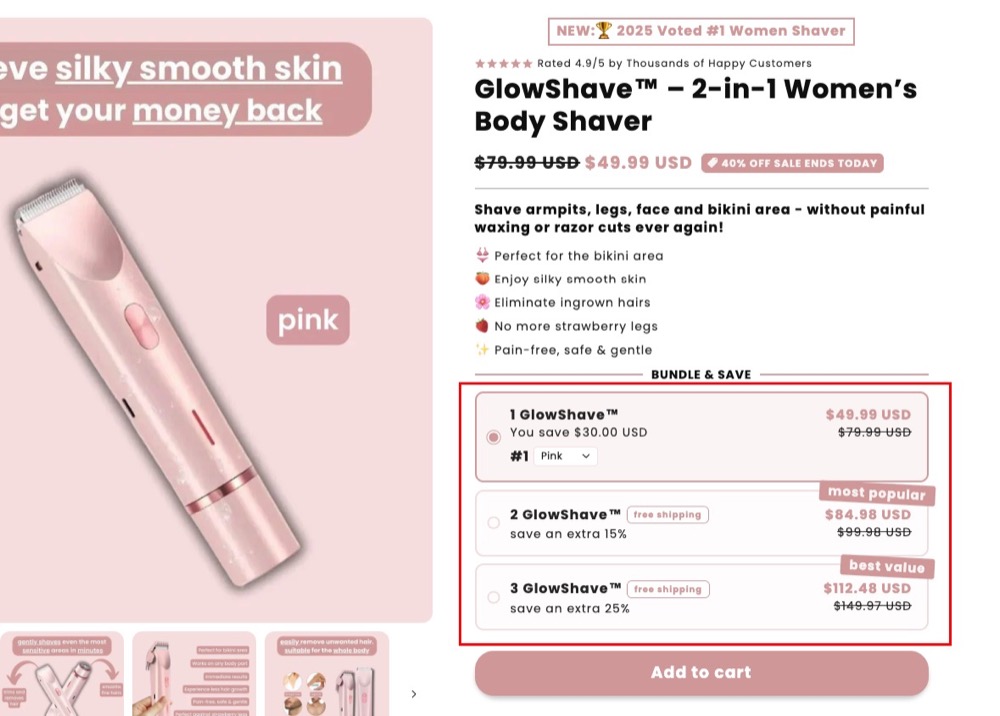
Bundles are one of the lowest-risk ways to explore price sensitivity on Shopify.
Instead of asking, “Will people pay more for this product?” you’re asking:
- Which combination of products feels like a better deal?
- Does adding a complementary item increase perceived value?
- Where does the psychological threshold sit for an order?
Apple’s pricing model is a classic example of this logic applied at scale. By anchoring higher-end options alongside base models, customers self-select into higher prices without feeling manipulated.
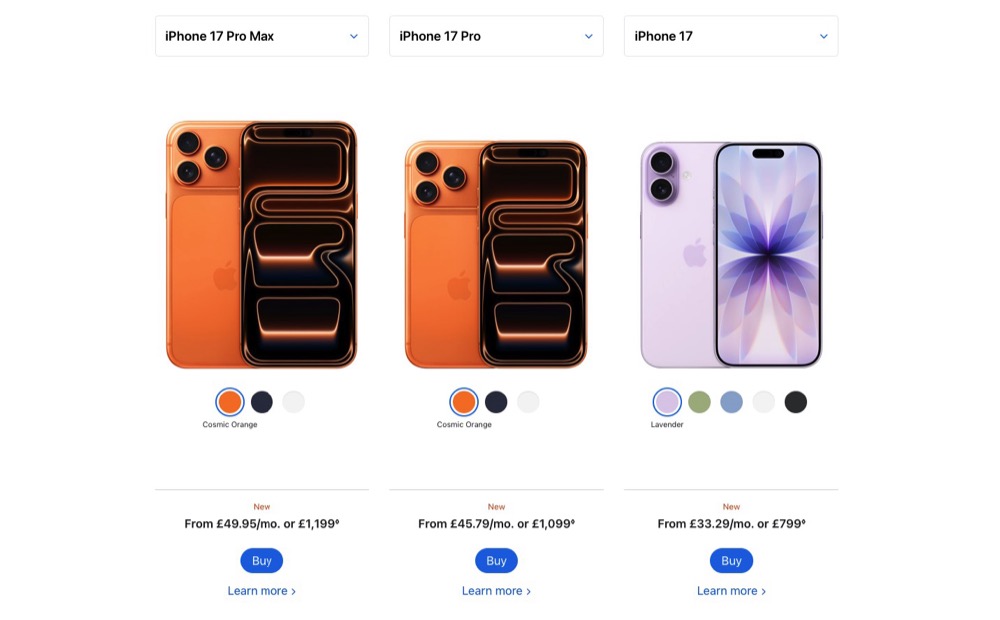
On Shopify, bundles let customers make that choice explicitly.
3. Tier Structure and Packaging
Tier testing is fundamentally different from charging different people different prices for the same thing (AKA price discrimination).
Effective tier tests focus on:
- Clear differences in scope or access
- Logical progression between tiers
- Whether customers cluster around one option or spread across several

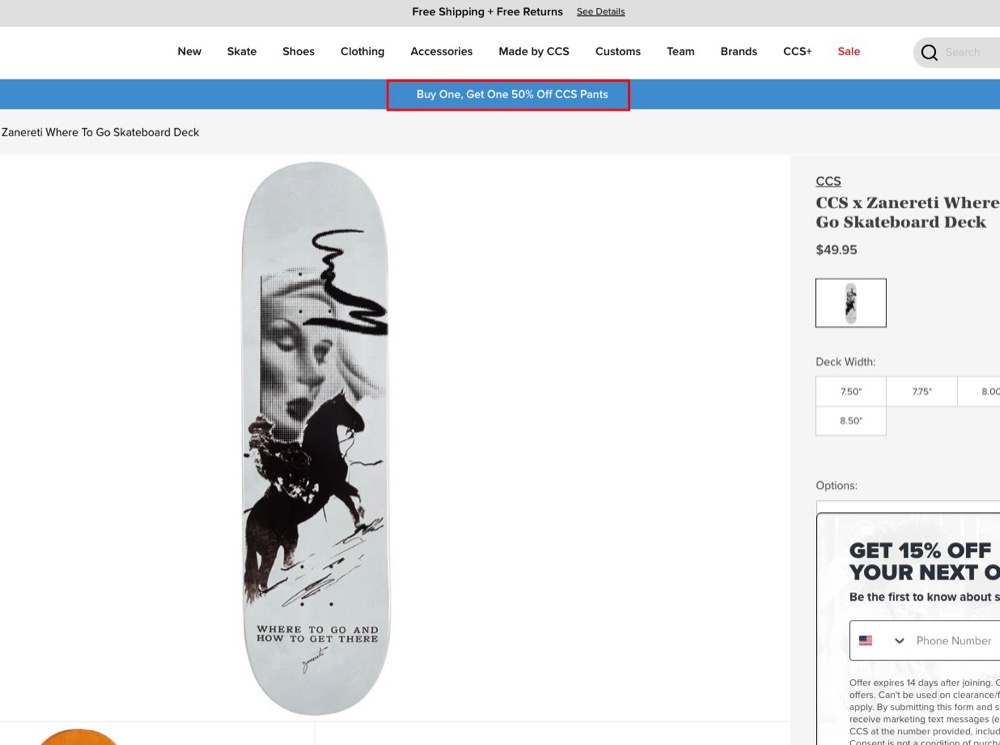
4. Discounts and Promotions (With Intent)
Discount experiments work when they’re answering a specific business question.
Useful discount tests usually fall into a few clear patterns:
- Discount vs no discount during a known demand window, such as a product launch, holiday, or paid campaign burst
- Threshold-based discounts (spend more, save more), e.g., when you test “spend $X, and get Y off” to see how it affects average order value
- Limited-time offers tied to inventory or seasonality, like clearing seasonal inventory or smoothing demand dips
Here, conversion rate isn’t the core focus. You’re looking to learn whether discounts creates purchases that would not have happened otherwise, or whether it simply pulls forward demand from customers who would have bought later at full price.
Why These Tests Often Beat Price Tests
These experiments share three advantages over direct price testing:
- They preserve price integrity by ensuring your customers see a consistent list price.
- They’re easier to explain, both internally and externally, since the logic is clear.
- They generate cleaner insight. You learn about perception, framing, and behavior without introducing fairness concerns.
For many Shopify teams, these tests deliver the insight they were hoping price testing would provide without the downsides.
Learn More: Ultimate Compilation of Shopify Store A/B Tests
How to Design Shopify Price Tests Responsibly
Responsible Shopify price testing begins with clarity about why you’re testing, what decision the results will inform, and how the test behaves once it reaches real customers.
Name The Decision Your Price Test Will Inform First
Because price tests can be highly impactful (influencing revenue, customer perception, etc.), they’re not suitable for exploratory testing without a defined endpoint.
A responsible pricing test must have:
- A concrete decision attached to each possible outcome
- A clear path for action once results are known, and
- An agreement in advance on what “enough evidence” looks like
Without this discipline, price tests will collect data without resolving uncertainty. You may see conversion lifts that appear meaningful in isolation, but the core pricing questions go unanswered.
Ground Price Tests in Research
Here, you’re going to use research to get a defensible range to test. A practical two-phase approach to price discovery combines survey-based price sensitivity with behavioral willingness-to-pay research.
Here’s how to go about that:
Phase 1: Price Sensitivity Survey (Van Westendorp Model)
Using the Van Westendorp Model (also known as the Price Sensitivity Meter), run a survey and let your respondents give a dollar value to the four survey questions below:
- At what price do you think the product is priced so low that it makes you question its quality? (Too cheap)
- At what price do you think the product is a bargain? (Cheap / Good value)
- At what price do you think the product begins to seem expensive? (Expensive / High side)
- At what price would you consider the product to be so expensive that you would not consider buying it? (Too expensive)
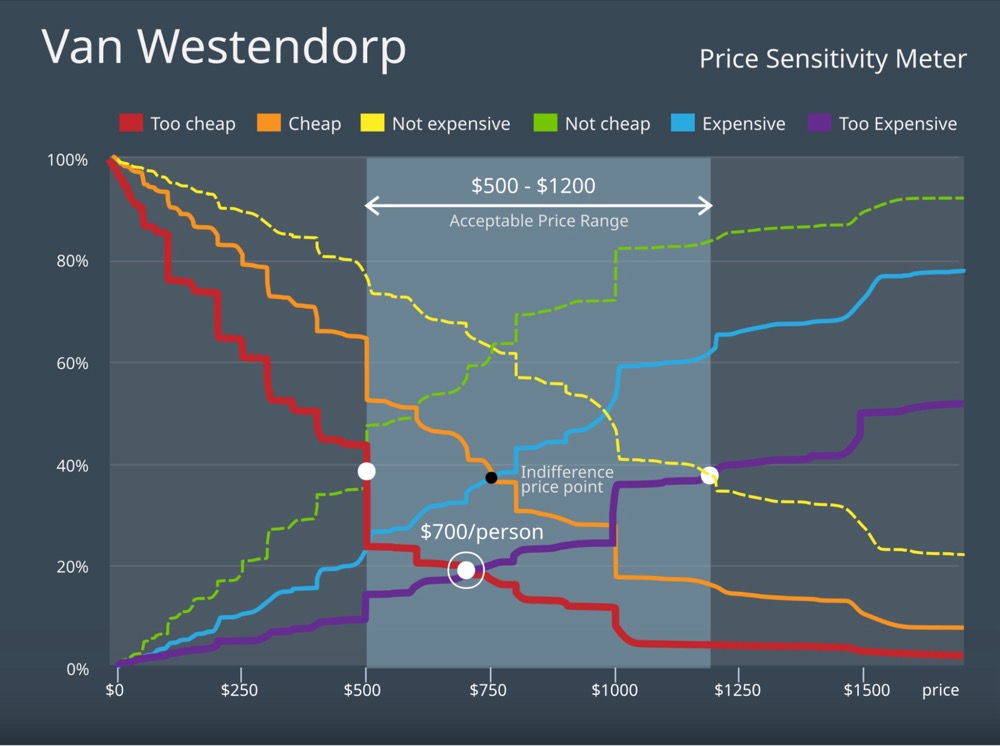
The results from your survey will provide you with an interval where price testing makes sense and where it doesn’t.
Phase 2: Willingness-to-Pay Testing (WTP) With Budget Constraints
Once that interval is established, you can move into unmoderated behavioral tests that simulate real trade-offs.
Give your participants a fixed amount of “currency” and ask them to decide whether to purchase the product at a given price. Tell them that any unused amount converts into real cash once the test ends.
This introduces a meaningful constraint. Choosing a $40 product out of a $50 allowance forces a decision between ownership and retained value, closer to how real purchasing decisions work.
But this approach has a known limitation. People tend to spend more freely with money they’ve just been given, which can slightly inflate price tolerance. You can reduce that bias by incorporating a Becker-DeGroot-Marschak (BDM) mechanism.
In a BDM test, participants state the maximum price they would genuinely pay for a product in realistic situations that reward truthfulness, making your WTP test more accurate.
Together, these phases narrow uncertainty, so your price tests become more of a tool for confirmation and comparison rather than just for exploration.
Design for Consistency Across the Funnel
Price changes have touch points far beyond the product page.
On Shopify, a single pricing decision flows through:
- Product detail pages
- Cart and checkout
- Analytics and attribution
- Paid media, feeds, and integrations
Responsible price tests maintain consistency across every step. When prices remain stable from first exposure through checkout, customers experience the experiment as intentional rather than erratic.
This consistency reduces friction and simplifies support, refunds, and post-test analysis.
Decide the Exit Path Before Launch
When writing your hypothesis, write your exit plan as well.
Every Shopify price test must have an operational plan. Beyond the decision the test is meant to inform, the plan must include criteria for ending or rolling out the change, and a response if customers question or challenge pricing.
The latter is particularly important as an ethical guardrail. If your response or explanation to customers doesn’t make sense, then you probably shouldn’t run that test.
Dark Patterns to Avoid in Shopify Price Testing
Some pricing experiments fail because of poor execution. Others fail because they cross lines customers instinctively spot as unfair.
The patterns below are known to create backlash, erode trust, and send regulators banging on your door even when the test is statistically sound.
1. Large, Unjustifiable Price Gaps
Wide gaps between variants effectively force one group to subsidise the other.
When customers later compare notes (and they do), the huge price differences feel arbitrary rather than experimental. Meanwhile, narrow, defensible ranges reduce perceived unfairness and make it easier for customers to rationalize it on their own.
2. Binding Customers to Worse Terms at Higher Prices
Locking users who purchased at a higher test price into stricter terms, such as annual commitments, introduces a compounding penalty.
If a test results in materially worse outcomes for customers, you should proactively communicate and remediate, including issuing refunds.
3. Removing Plan Essentials From Lower-Priced Variants
Price tests should evaluate value, not sabotage outcomes. Stripping critical features, guarantees, or support from a lower-priced option will distort your test results and create failure states that aren’t related to willingness to pay.
Customers interpret this as bait-and-switch behaviour, even when unintentional.
4. Running High-Impact Tests Without Explicit Consent
Some pricing experiments materially affect access, affordability, or long-term cost. In those instances, transparency minimizes impact on customers.
Disclosed cohort testing or opt-in participation shows that you respect user autonomy and this is good for your brand in the long run.
5. Breaking Established Geographic Price Parity
If you’ve historically adjusted pricing by region, removing that parity during a test can reduce conversion rates and exclude those customers who rely on adjusted pricing to buy.
Rather than letting that happen, you should test within existing regional price bands. That is, run experiments that compare small, explainable differences inside each market rather than putting everyone into the same global price bucket.
6. Pricing “Ethical” Options Higher By Default
Research shows that consumers form a separate mental association between price and ethicality, separate from how they judge quality.
A 2023 Journal of Business Research study found that when ethical products are discounted, ethically minded buyers often doubt whether the product is genuinely ethical and become less likely to purchase (Ryoo & Kim, 2023).
This means ethical value works best when it’s explained. Using a higher price to communicate it won’t suffice. Instead, you should make ethical attributes explicit and let customers opt into them with full context, so they’re choosing consciously without feeling morally taxed.
5 Shopify Price Testing Apps to Consider
Shopify’s app ecosystem includes several tools that support price testing in different ways. The apps below were selected based on two criteria:
- They are among the most reviewed and highest-rated price testing or experimentation apps on the Shopify App Store
- They are actively used by Shopify merchants running real pricing and CRO experiments today
1. Convert
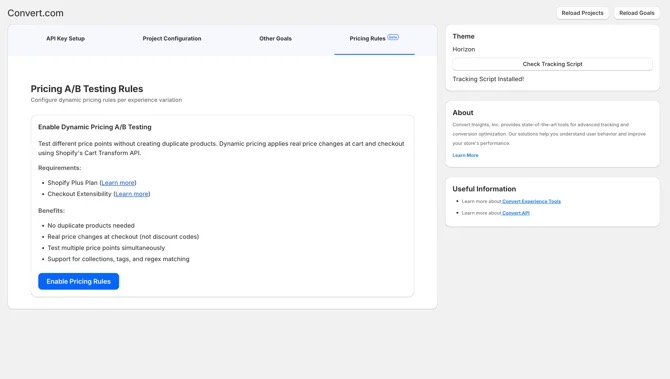
A full-scale experimentation platform with a dedicated Shopify custom app that supports price testing as part of a broader CRO and experimentation workflow.
Convert is typically used by teams that want pricing experiments to sit alongside tests on messaging, layout, checkout, and funnels, rather than operating price tests in isolation.
Top features
- Dedicated Shopify custom app with deep integration across product, cart, and checkout
- Rule-based price testing that supports controlled, auditable experiments
- Ability to test pricing alongside UX, messaging, and funnel changes
- Consistent price behavior across the entire purchase journey
- Advanced targeting, QA, and rollback controls for high-impact tests
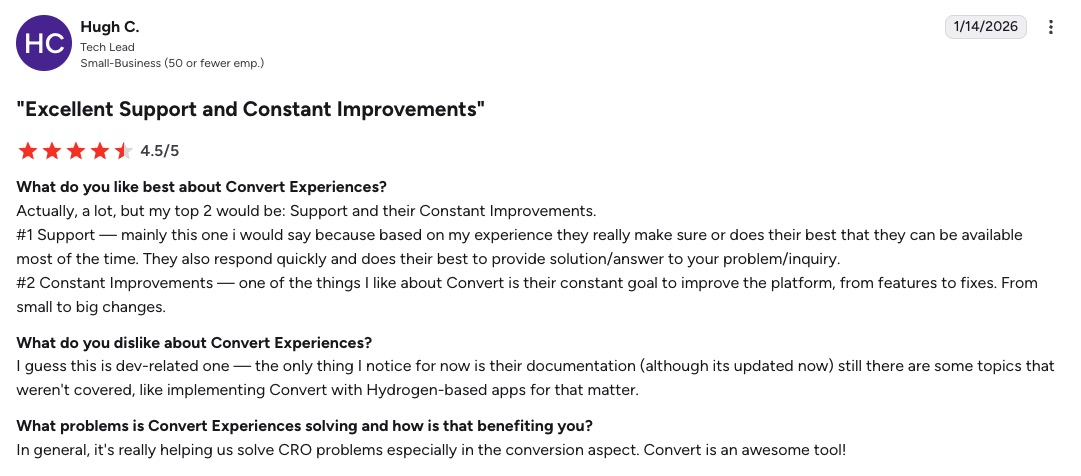
What a user said about Convert
How Convert Handles Real-World Shopify Price Tests
Shopify price testing becomes complex the moment it runs alongside real promotions, real customers, and real revenue targets.
Your price tests don’t run in isolation. They run next to seasonal sales, VIP perks, bundles, clearance logic, and campaign-specific discounts. Often all at once. Once a product qualifies for more than one rule, pricing stops being a simple experiment and becomes a systems problem.
But with Convert…
You decide how pricing rules interact
When multiple pricing rules apply, you can choose how they combine. You can apply rules sequentially, group percentage changes before fixed adjustments, or resolve everything to a single best price.
Your prices stay consistent across the journey
A customer shouldn’t see one price on a product page and another at checkout. Convert carries pricing logic across product pages, collections, cart, and checkout, ensuring what customers see is consistent and intentional.
Your tests run alongside real campaigns
You don’t have to pause sales to test pricing. Convert lets experiments coexist with live promotions, bundles, and loyalty discounts without accidental stacking or broken logic. You keep revenue moving while still learning.
You get insight you can actually act on
Because pricing behavior stays predictable, your results hold up. You spend less time untangling edge cases and more time deciding what to ship next.
Learn More About Shopify Pricing A/B Testing with Convert
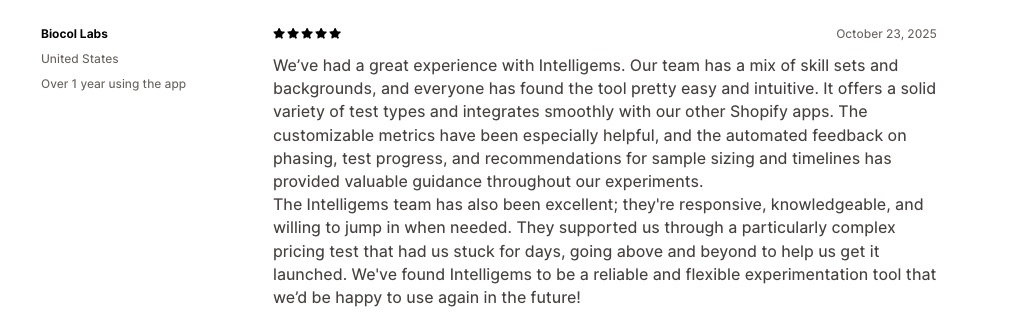
2. Intelligems
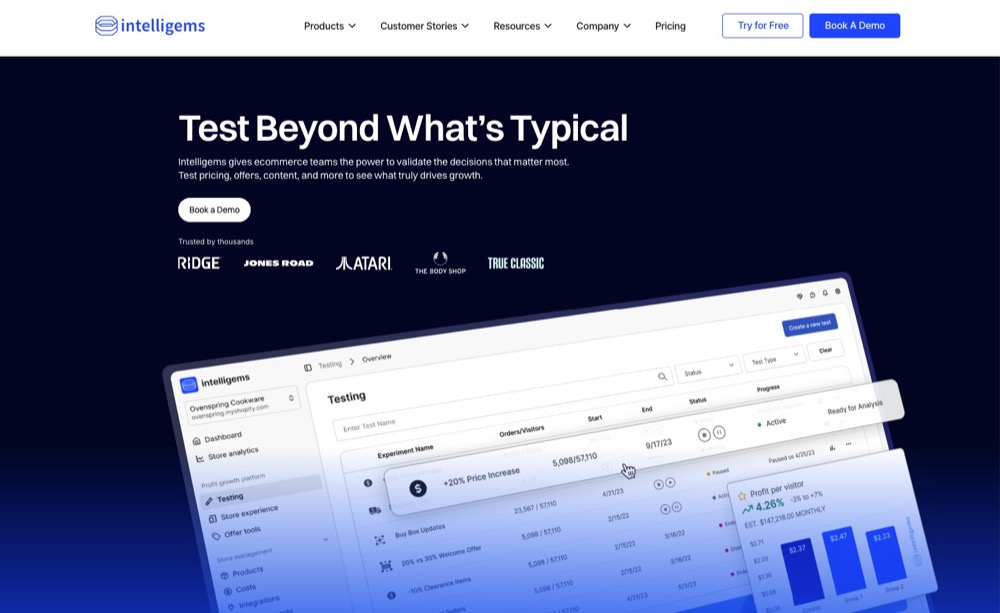
A Shopify-native A/B testing and profit optimization platform focused on pricing, discounts, and revenue-driven experimentation.
Intelligems is commonly used by DTC brands that want to connect pricing decisions directly to profit metrics and cost data.
Top features
- Price and discount A/B testing across product catalogs
- Support for testing shipping rates, offers, and promotions
- Analytics that factor in COGS and profit, not just conversion
- Segmentation and rollout of winning variants
- Integrations with Shopify checkout and common analytics tools
What a user said about Intelligems
3. Elevate A/B Testing
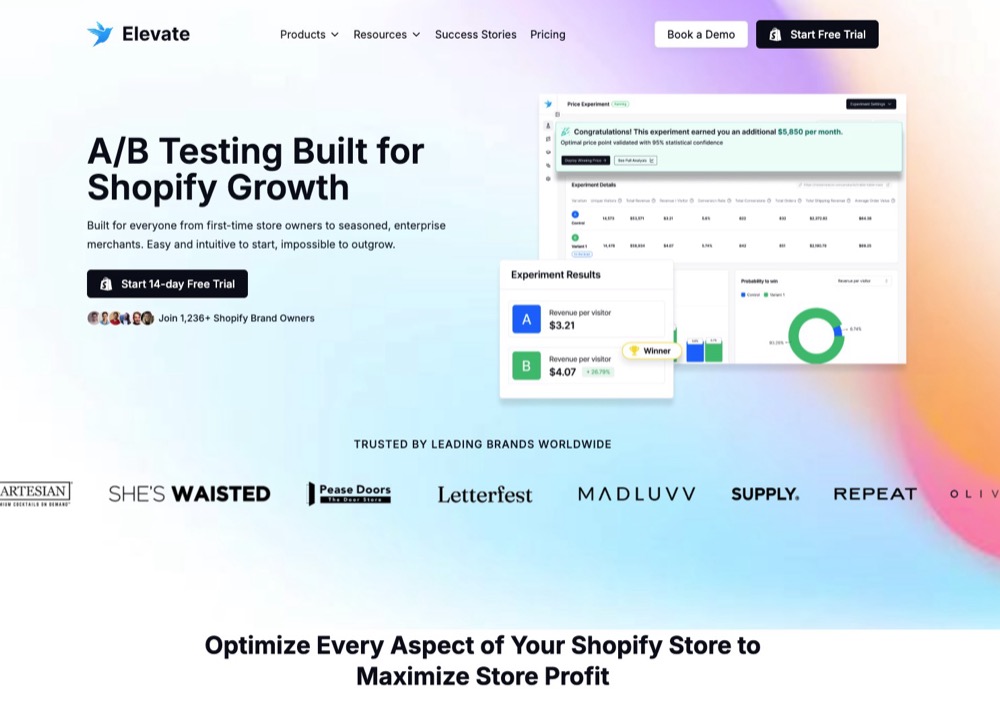
An all-in-one A/B testing platform for Shopify that includes price testing alongside content, theme, and checkout experiments.
Elevate is often chosen by teams that want broad testing coverage with minimal setup friction.
Top features
- Price and shipping rate testing on Shopify
- Theme, template, and checkout flow experiments
- Real-time analytics with confidence scoring
- Audience targeting and segmentation
- Integrations with common Shopify page builders and analytics tools
What a user said about Elevate A/B Testing

4. Personizely
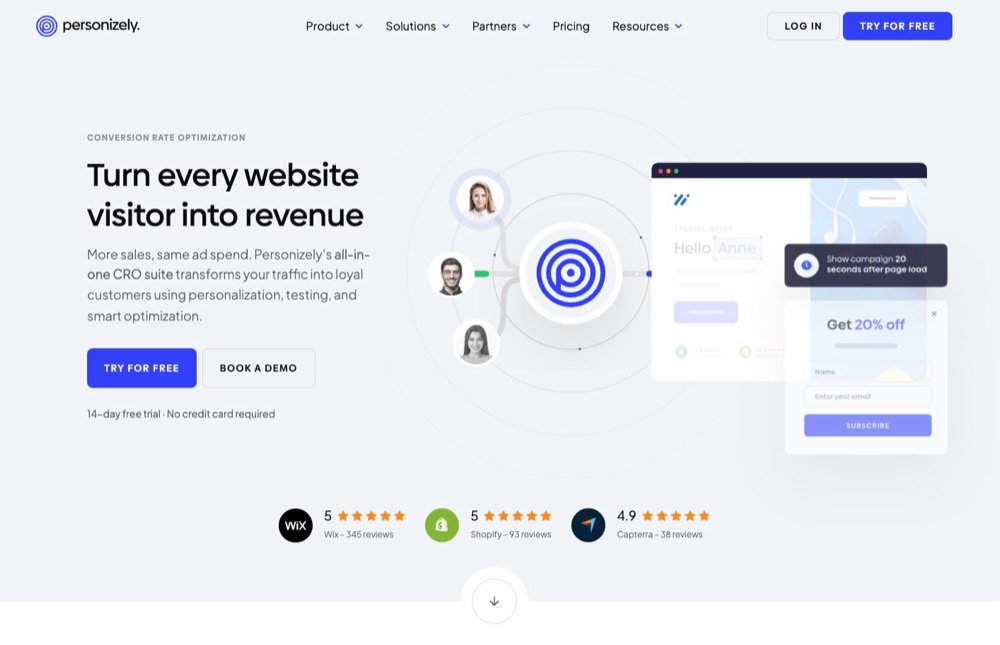
A CRO and personalization platform for Shopify that supports price testing as part of a wider optimization toolkit.
Personizely is frequently used where pricing experiments intersect with personalization, targeting, and on-site promotions.
Top features
- Price A/B testing alongside content, themes, and URLs
- Advanced audience targeting and personalization
- On-site widgets such as popups and motivator bars
- Real-time analytics and CRO reporting
- Integrations with email, analytics, and CDP tools
What a user said about Personizely

5. ABConvert
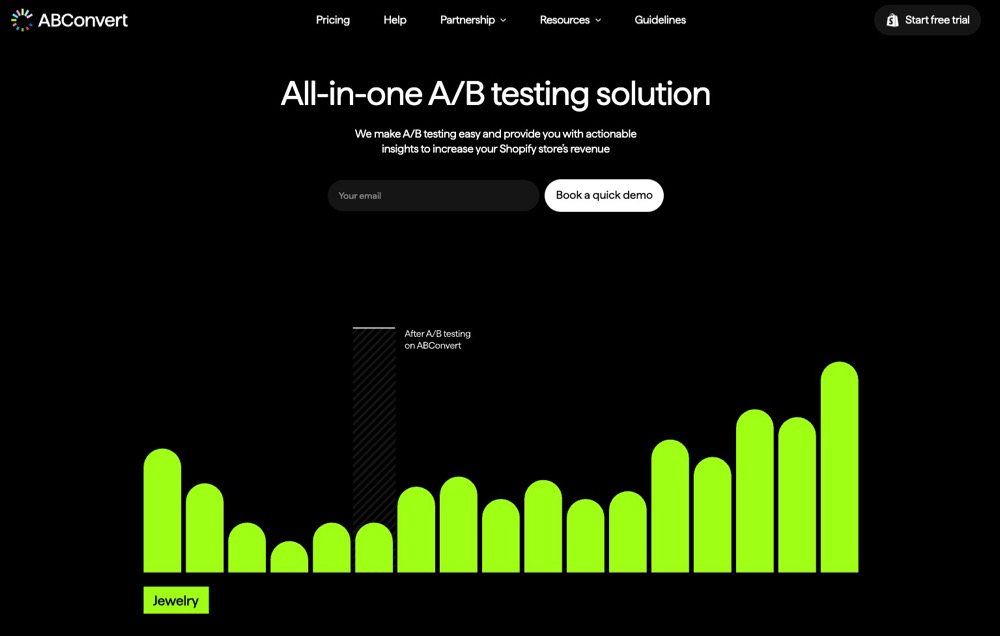
A Shopify app focused on A/B testing prices, shipping, and core store elements with an emphasis on speed and simplicity.
ABConvert is typically evaluated by merchants looking for a dedicated price testing solution with straightforward configuration.
Top features
- Product price A/B testing
- Shipping rate and free-shipping threshold experiments
- Template, theme, and checkout testing
- Real-time traffic splitting and analytics
- Support for country- or UTM-based price experiments
What a user said about ABConvert

Browse More Shopify A/B Testing Tools: 13 A/B Testing Platforms for Your Shopify Store
What Legal and Ethical Guardrails Matter for Shopify Price Testing?
Price testing sits in a space where legality, ethics, and customer perception overlap. If you only think about one of these and ignore the other two, the risks sneak up on you.
Important: This article reflects practical patterns and public guidance, not legal advice. Always involve your legal or compliance team before running high-impact pricing experiments.
There is no single law that bans price testing outright. What regulators care about is how prices are set, disclosed, and targeted.
In the US, price discrimination is generally lawful unless it crosses specific lines.
Key frameworks:
- Federal Trade Commission (FTC) guidance on unfair or deceptive practices
- Sherman Antitrust Act and Clayton Act, with amendments via the Robinson–Patman Act
In practice:
- Charging different prices is allowed
- Using protected attributes such as race, gender, or nationality is prohibited
- Price differences that mislead consumers or distort competition invite scrutiny
This means the problem isn’t testing prices. You risk legal repercussions if you’ve got opaque execution or discriminatory logic.
The EU places stronger emphasis on fairness and transparency.
The relevant frameworks here include:
- EU Geo-blocking Regulation
- Consumer Rights Directive
- GDPR
Key implications:
- Customers cannot be charged different prices based solely on nationality or location within the EU
- Prices must be clearly disclosed before purchase
- Personal data cannot be used for personalized pricing without explicit, informed consent
In the EU, hidden price tests and location-based manipulation create immediate exposure to legal issues.
UK rules are similar to many EU principles. There’s just some local nuance.
Key frameworks are:
- Consumer Rights Act 2015
- Consumer Protection from Unfair Trading Regulations (CPRs)
These imply that:
- Prices must be transparent at the point of purchase
- Unfair or misleading pricing practices can invalidate contract terms
- Sector-specific rules apply in regulated industries such as financial services
Pricing tests are rarely explicitly illegal. They sit in a regulatory gap where transparency and intent matter more than the mechanism itself.
Where Ethical Risk Emerges in Price Testing
You’ve most likely heard someone say, “Just because it’s legal doesn’t make it right.”
But is price testing wrong or unethical?
We chatted with Jon Crowder, Founder & Director of Another Web Is Possible, to get some perspective from someone who’s been a key voice in the ‘ethical conversation rate optimization’ conversation.
He puts it plainly:
The ethical risk comes from charging customers different prices for essentially the same product. Some businesses justify this by calling it ‘dynamic pricing’, but the reality is customers never feel good about paying more for what they know others get for less.
You can extend that to ‘why should some customers get offers and others not get offers’. The fairest business is one where the pricing is crystal clear to everyone, and you categorically don’t really do price manipulation in any way.
Where does the risk come from? Two places. One, you’re going to upset the customers who find out they’re paying more as part of a pricing test. Two, you’re exposed to regulatory risk depending on where you are trading.
Jon Crowder
Those risks compound when pricing experiments are hidden, difficult to explain, or optimized purely for short-term outcomes.
Craig Sullivan, Experimentation Consultant at Optimise or Die, helps businesses increase conversion and improve the UX of their multi-channel and multi-platform businesses. Craig talks about the perverse incentives in experimentation that are harmful to the user experience on an episode of the UX podcast.
If you make revenue, your main driver, then people will think, ‘Oh, okay, we’ll put up the shipping fees, right? That will increase the revenue’, or ‘We’ll change the mixture of products that we sell, that will increase revenue’, or ‘We’ll put loads of upsells. And cross-sells on the page, we’ll add extra pop-ups.’ Right?
The metric itself that you set actually conditions the behavior that then occurs. And if [that’s] your only metric: ‘Does it make more money?’, then, of course, it’s invisible to you whether that’s harmful to the user experience.
Craig Sullivan
Price testing magnifies this problem. Because revenue responds immediately to price changes, teams can mistake short-term lifts for long-term success—while trust quietly erodes in the background.
Transparency, Governance, and Metrics Beyond Conversion
If ethical risk emerges from unfairness and misaligned incentives, the antidote is structure.
Jon is explicit about where teams should start:
Before you start testing at all, run proper willingness-to-pay research. Ask people what they’d pay and why. They consent to the conversation, and there’s no material effect on them.
You can try cohort-based testing, where you disclose that you’re doing it. For example, ‘we’re testing whether annual subscriptions work better than monthly’. You’re testing the model, not exploiting different willingness-to-pay.
You can also try tier testing (and be transparent about it). Offer clearly defined pricing tiers based on genuine service scope differences. Test which tier structure converts best, not whether to charge different people different amounts for identical service. Users understand what they’re buying.
Jon Crowder
Beyond test design, Jon argues that governance matters more than intent. Ethical decisions shouldn’t sit with whoever owns the KPI.
Something I would like to encourage more of is ethics panels. Rather than individuals who are targeted with KPI deciding what’s ethical, I recommend businesses establish a standing ethics board, similar to research ethics committees in medicine and academia.
It’s a cross-functional group that reviews significant changes, testing plans, and new features before they go live, against clear criteria around user autonomy, transparency, and potential harms.
When done right, the board has real decision-making power.
If they say no to something, it doesn’t go forward without escalation and justification. This creates institutional accountability rather than relying on one person’s judgment.
For testing specifically, the board would assess: Is this transparent to users? Could it manipulate or exploit them? Are we respecting consent and autonomy? Does the benefit to the business justify any user friction or data collection?
What’s our obligation if we discover harm?
The reason for this is [that] it’s embedding ethical thinking into how you make decisions, the same way safety committees embed safety into manufacturing.
Most businesses don’t have this. The ones that do make better products and avoid costly mistakes.
Jon Crowder
In a Nutshell…
Teams that benefit from price testing know why they’re running the experiment, what decision it will inform, and how customers will experience the change across the journey. Pricing experiments work best as part of a broader pricing strategy, supported by research and reinforced through consistency.
If you decide to test pricing on Shopify, anchor the experiment in a real question, choose approaches you can explain with confidence, and design with visibility in mind. That mindset keeps pricing tests focused, credible, and worth acting on.
Shopify Price Testing FAQs
Q1. Is Shopify price testing legal?
In most regions, price testing itself is permitted. Legal risk tends to emerge around transparency, targeting, and data usage rather than experimentation as a concept.
Across the US, UK, and EU, you must clearly disclose pricing before purchase. Price differences tied to protected attributes or personal data without consent expose your company to regulatory risk.
Because enforcement and interpretation vary by region, you should get a legal review of your high-impact pricing experiments before launch.
Q2. Can price testing hurt customer trust?
Yes, particularly when customers discover they paid more than others for the same product without understanding why.
Trust erosion tends to surface when price differences feel arbitrary, difficult to explain, or hidden. Smaller, explainable differences and a clearly defined pricing logic significantly reduce this risk.
Q3. Will price testing mess up my Google Shopping or Meta Ads?
It can.
Ad platforms such as Google Merchant Center and Meta continually crawl your site to verify that the price in your feed matches the price on the landing page.
If a crawler sees a different price because it was served a test variant, that mismatch can trigger product disapprovals or even account suspensions.
To fix this, make sure ad crawlers always see a stable control price that matches your feed. That usually means bot exclusion or user-agent handling inside your testing setup, and avoiding automatic feed updates during high-impact price tests. Done right, you can test prices without putting paid traffic at risk.
Q4. How long should I run a price test to obtain a reliable result?
As a baseline, run price tests for at least two to four weeks. That gives you coverage across pay cycles, weekdays versus weekends, and normal demand swings.
Even if a test “wins” in a few days, stopping early risks locking in a result driven by timing rather than true preference.
Pricing data is also noisy. A handful of large orders can skew revenue, so you need enough volume to represent your average customer, not just your most price-insensitive ones.
And there’s a practical limit, too. The longer a test runs, the longer some customers see a worse deal. Use guardrails. If a variant tanks conversion quickly, stop it. Precision matters, but brand trust compounds faster than perfect certainty.
Q5. Should price testing optimize for conversion only?
Conversion provides immediate feedback, but pricing influences customer perception over time.
When running price testing, you should also track:
- Support tickets and complaints
- Refunds and churn narratives
- Repeat purchase behavior
- Long-term value and advocacy
Balancing short-term signals with longer-term outcomes produces more durable pricing
Q6. Can Shopify support personalized pricing experiments?
Shopify’s architecture imposes limits on individualized pricing, particularly regarding checkout consistency and data use.
Most pricing experiments on Shopify work best when applied through explicit rules, cohorts, or product structures rather than individualized pricing logic.

Written By
Uwemedimo Usa
Edited By
Carmen Apostu