What happened to the Head of Growth?


The title did not evolve. It split into four roles, and one of them is a CRO job.
Back in 2022, I was horrified by some of the Head of Growth job specs I was seeing. They’d ask you to run the growth strategy, own experimentation, and, oh, five channels too, including offline, SEO, paid ads, and more. No biggie.
Naturally, I collected the data to get to the root of the problem. Here’s what my analysis of six roles back then showed:
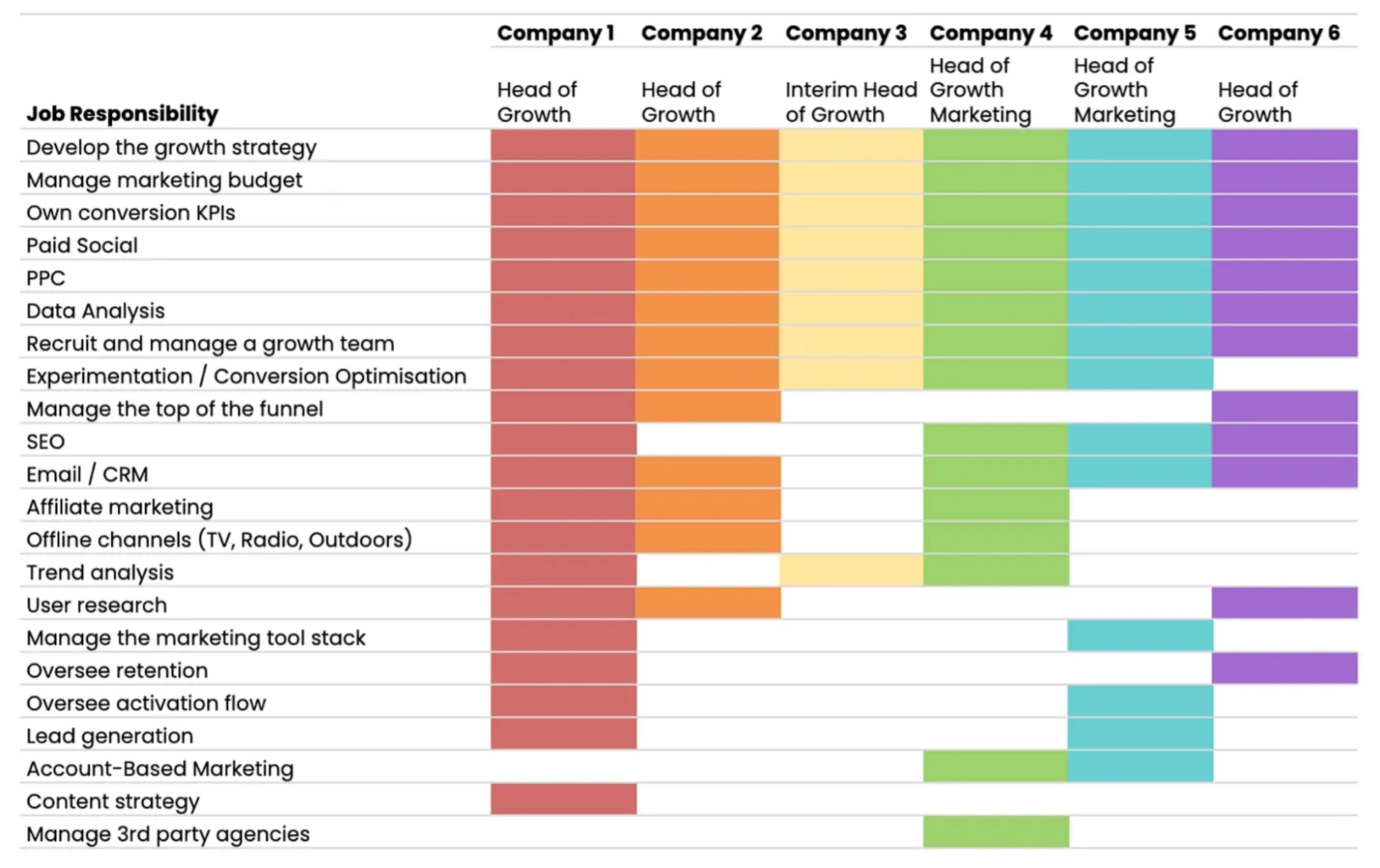
In 2026, I decided to rerun the analysis. Luckily, AI made it much easier to analyze more roles, so this time I looked at 20. It’s fascinating to see what’s disappeared from the job spec, what’s changed, and what’s stayed the same.
Especially the salary. In 2022, advertised salaries were usually between £55k and £80k. Inflation has been high, but it doesn’t explain the range today: the same title now pays £70k at one company and £250k at another.
The job hasn’t evolved. It’s split.
So here’s what changed, and why it matters for CRO. Experimentation and CRO appeared in 83% of the roles back then. In 2026, it’s 85%. Let’s dig in.
What left the spec
I complained loudly back then that Head of Growth roles were too broad. It reminded me of my agency days, when my alternative title was H.O.R.S.E.: Head of Random Sh*t Everyday.
That’s what the average Head of Growth used to be. It was far too easy to say, “That impacts growth, let’s stick it under the Head of Growth role.” By that logic, just about everything could fall under the role.
The worst offender was channels. Each one requires very different expertise, especially when you’re comparing brand and growth channels. I genuinely don’t believe one person can know 5–10 channels well. I’ve tried it myself, and it was exhausting.
Thankfully, the number of channels listed in a single spec has dropped in 2026.
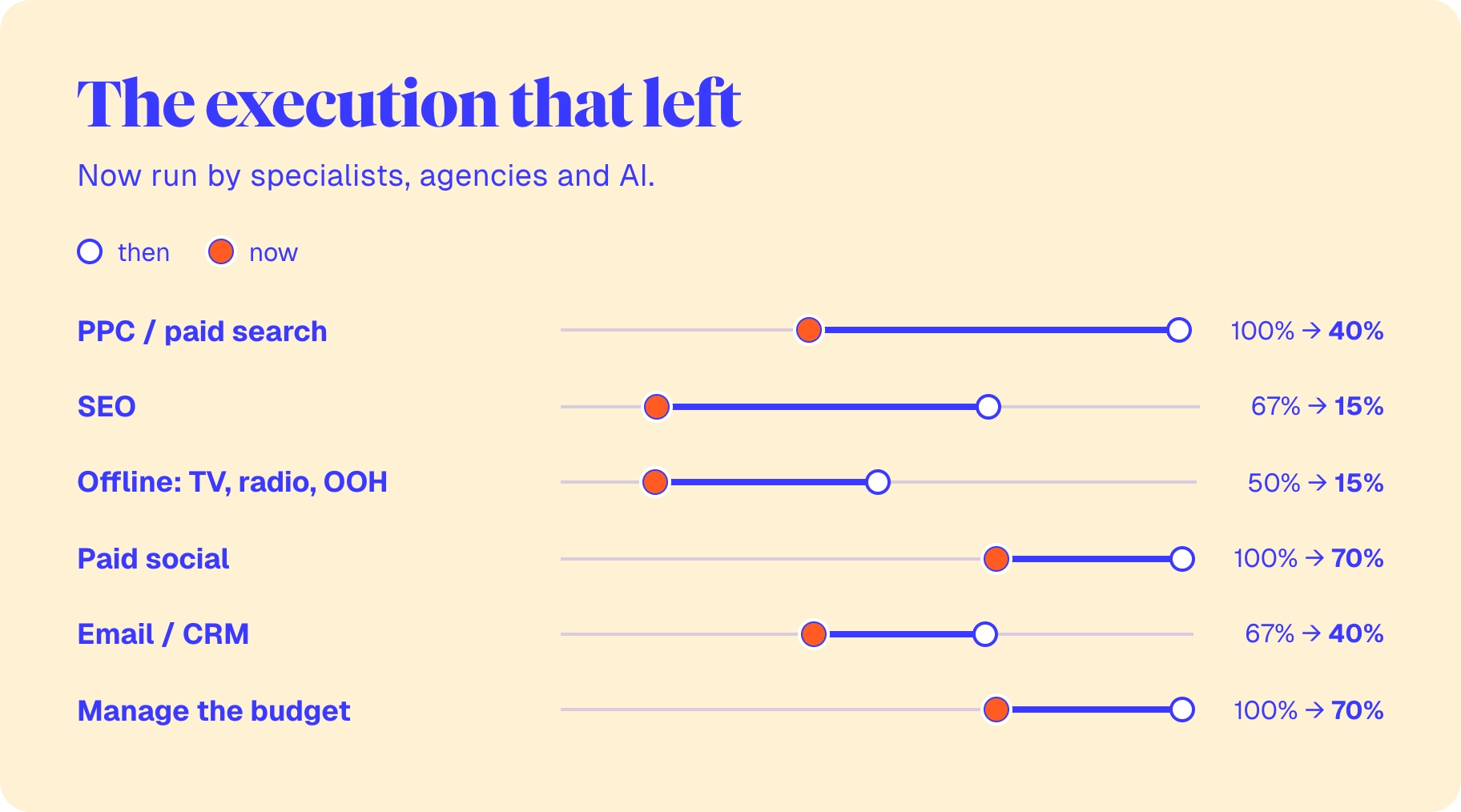
That doesn’t mean companies have stopped running those channels. The work has moved to specialists, agencies, and tools — or, well… AI agents.
What’s changed is that the growth lead is no longer expected to personally run all of them.
The attributes fell harder than the responsibilities:
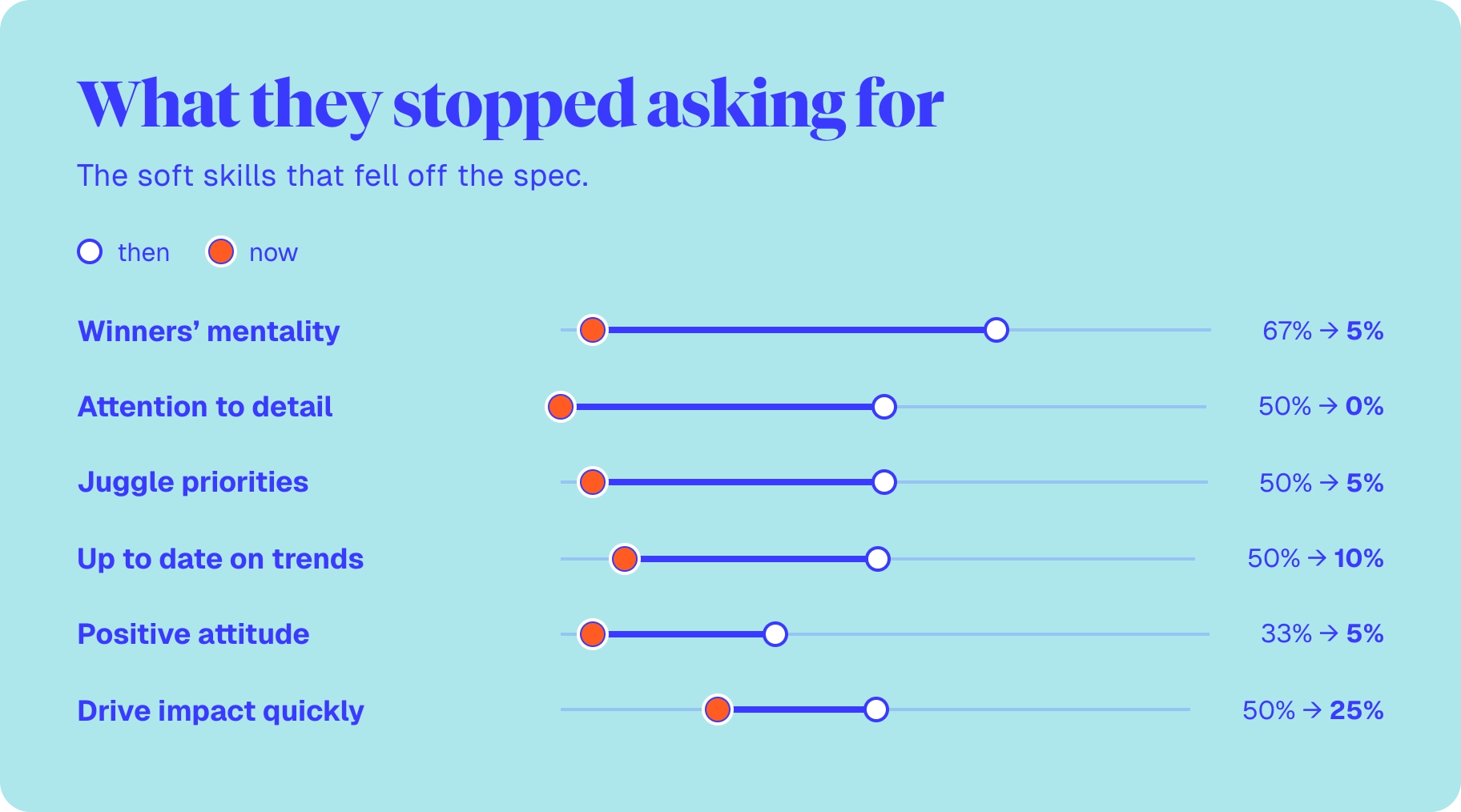
A lot of these have been made easier by AI:
- I have a weekly scheduled task that keeps me up to date on growth trends.
- We’re all getting better at juggling priorities and tasks. AI means we’re often running multiple things at once, making this the standard rather than a specific requirement.
- AI can recheck the details, allowing the growth person to move quickly without sacrificing accuracy.
Now that’s what disappeared. But what survived?
What survived and what was added
Experimentation is the main hands-on skill that survived the purge intact, and it is now expected of a more senior, more expensive person than it was in 2022.
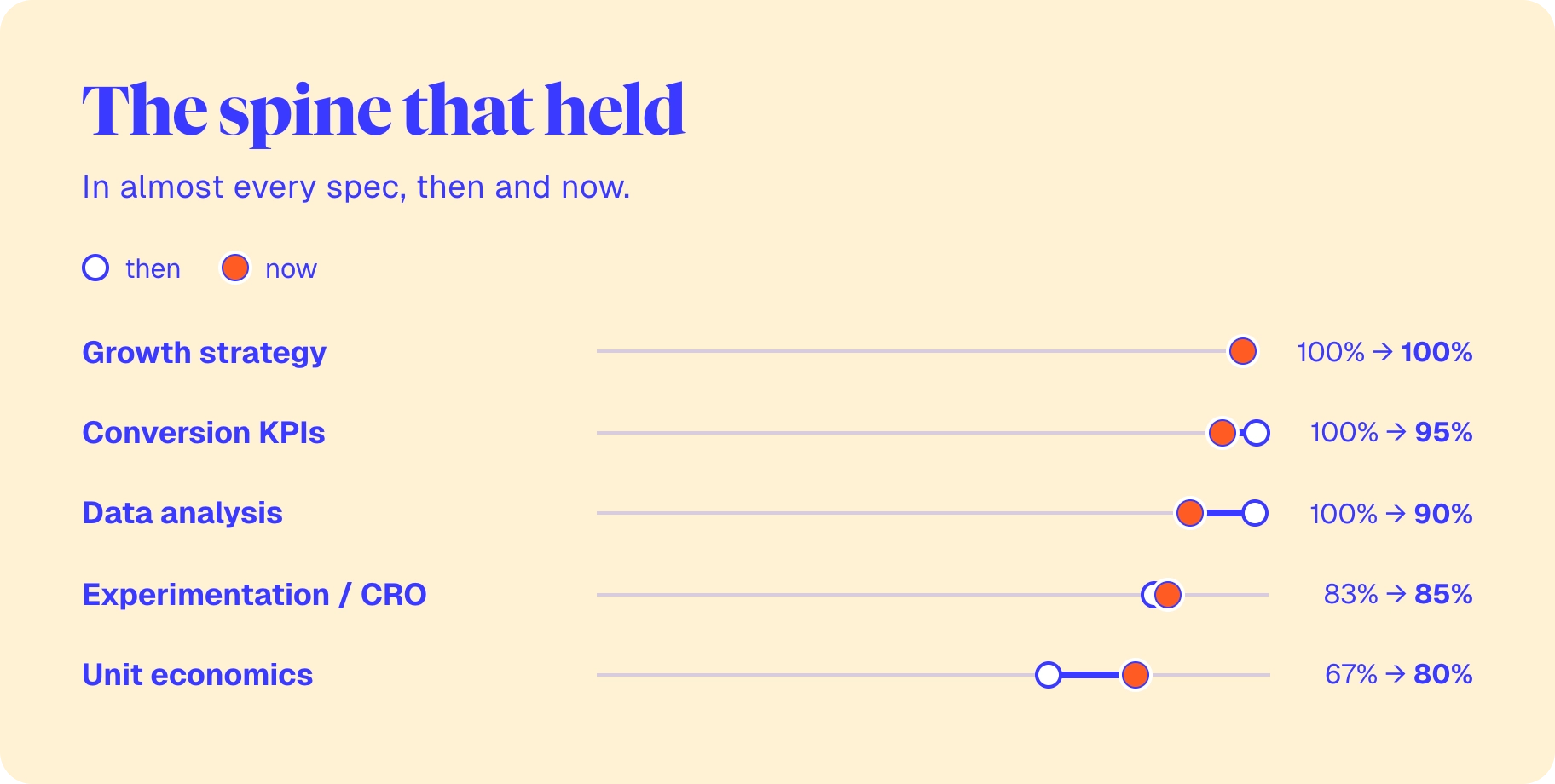
This actually aligns with something that Kevin Anderson, a Fractional Product & Experimentation Leader, shared at this year’s Women in Experimentation x Convert Summit:
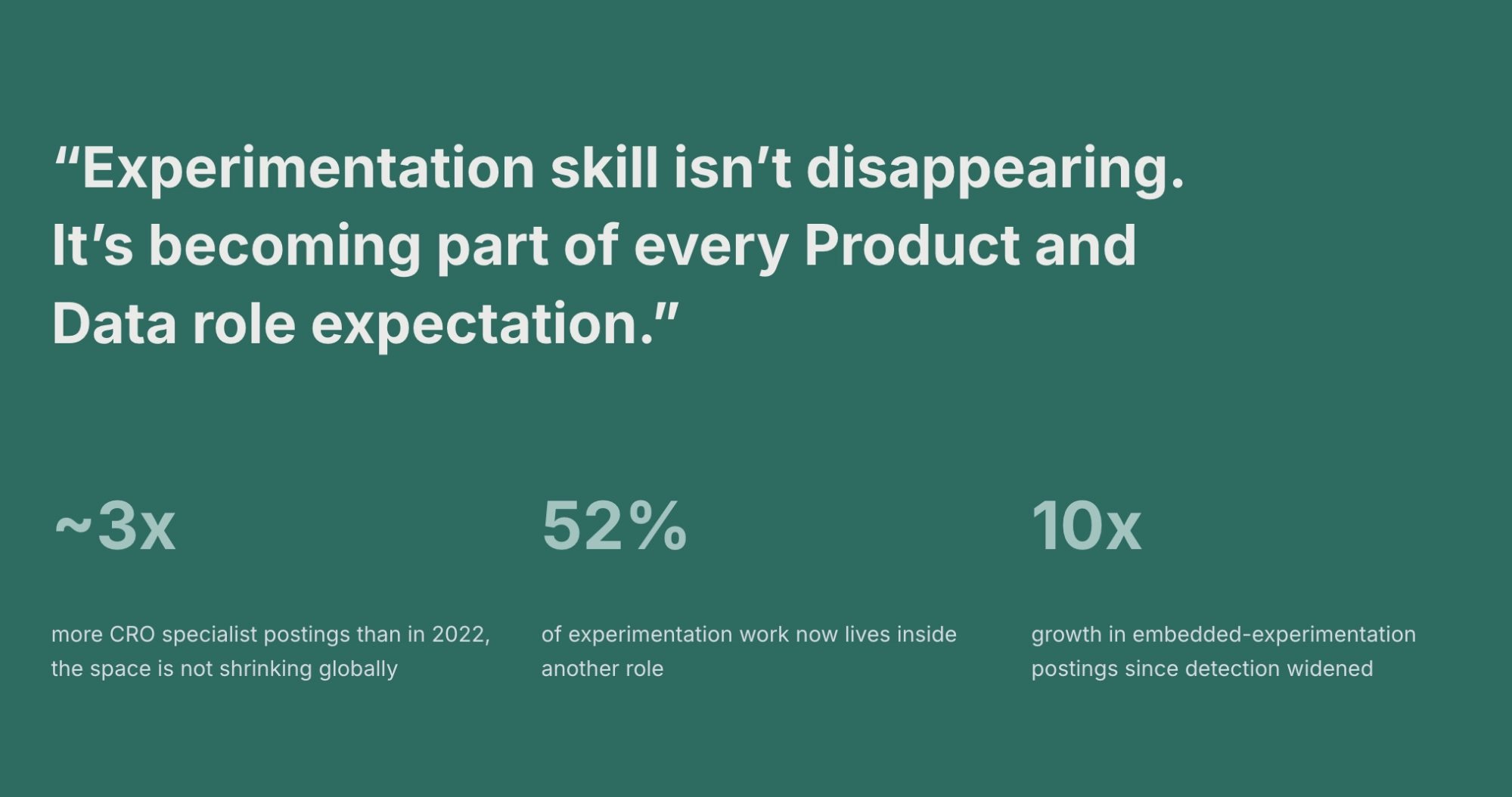
I’ve always felt that experimentation and growth overlap closely, having attended experimentation conferences when there were no major growth conferences. The two can’t exist separately, so it’s great to see growth roles centralize around these core skills, as well as more focus on where I believe growth should be working on:
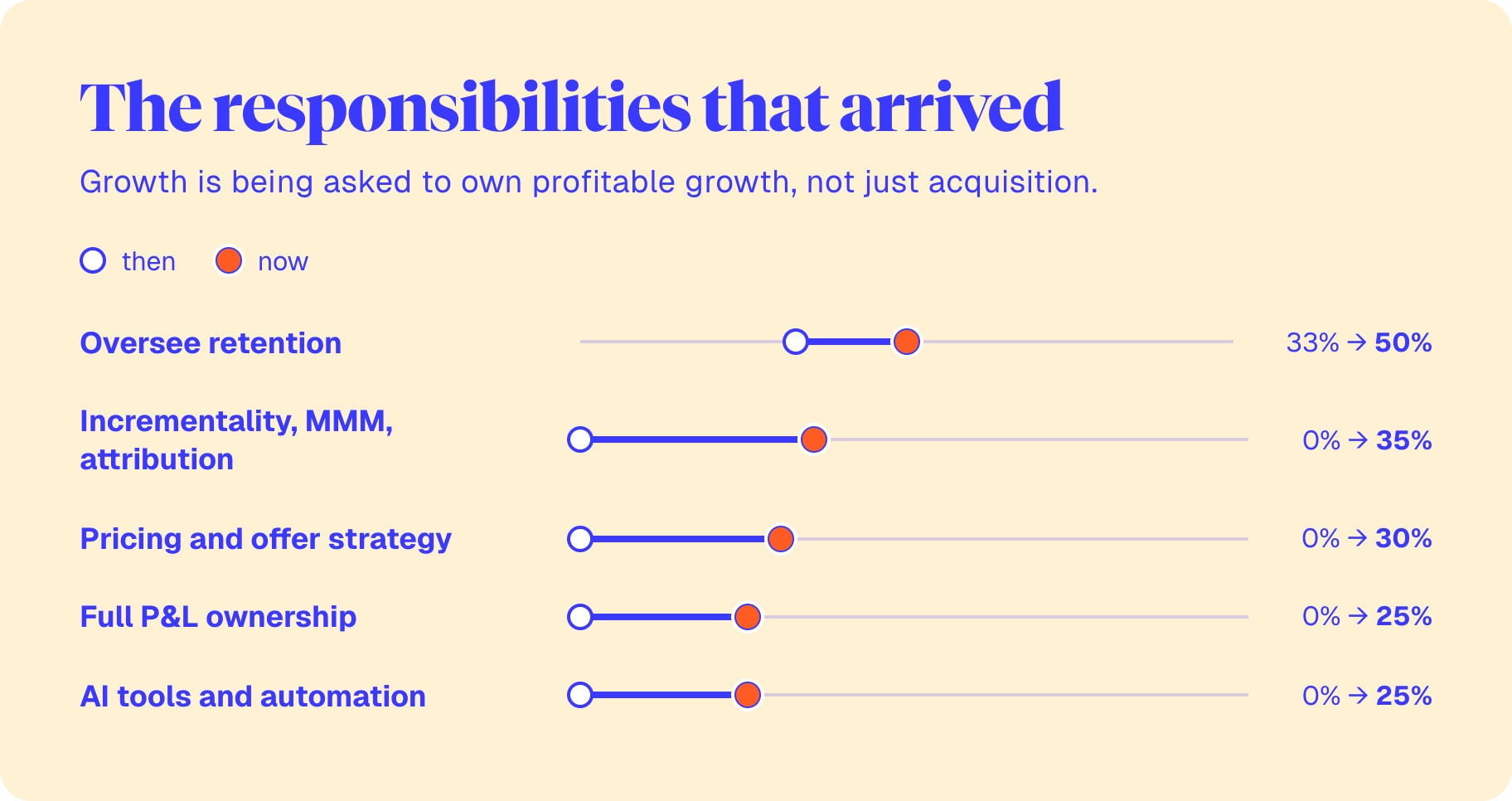
Building a product that drives growth through retention profitability. That prioritization of more profitable growth is evident in the greater emphasis on incrementality and attribution, as well as full P&L ownership.
Growth finally stopped meaning acquisition for a lot of companies (I’ve ranted for far too long that growth isn’t marketing). For experimentation, this means your roadmap no longer ends at the point of purchase.
The skills that are on the rise
We’ve talked about what disappeared in terms of mindset, many of them because AI made them easier or less important. But did anything replace them?
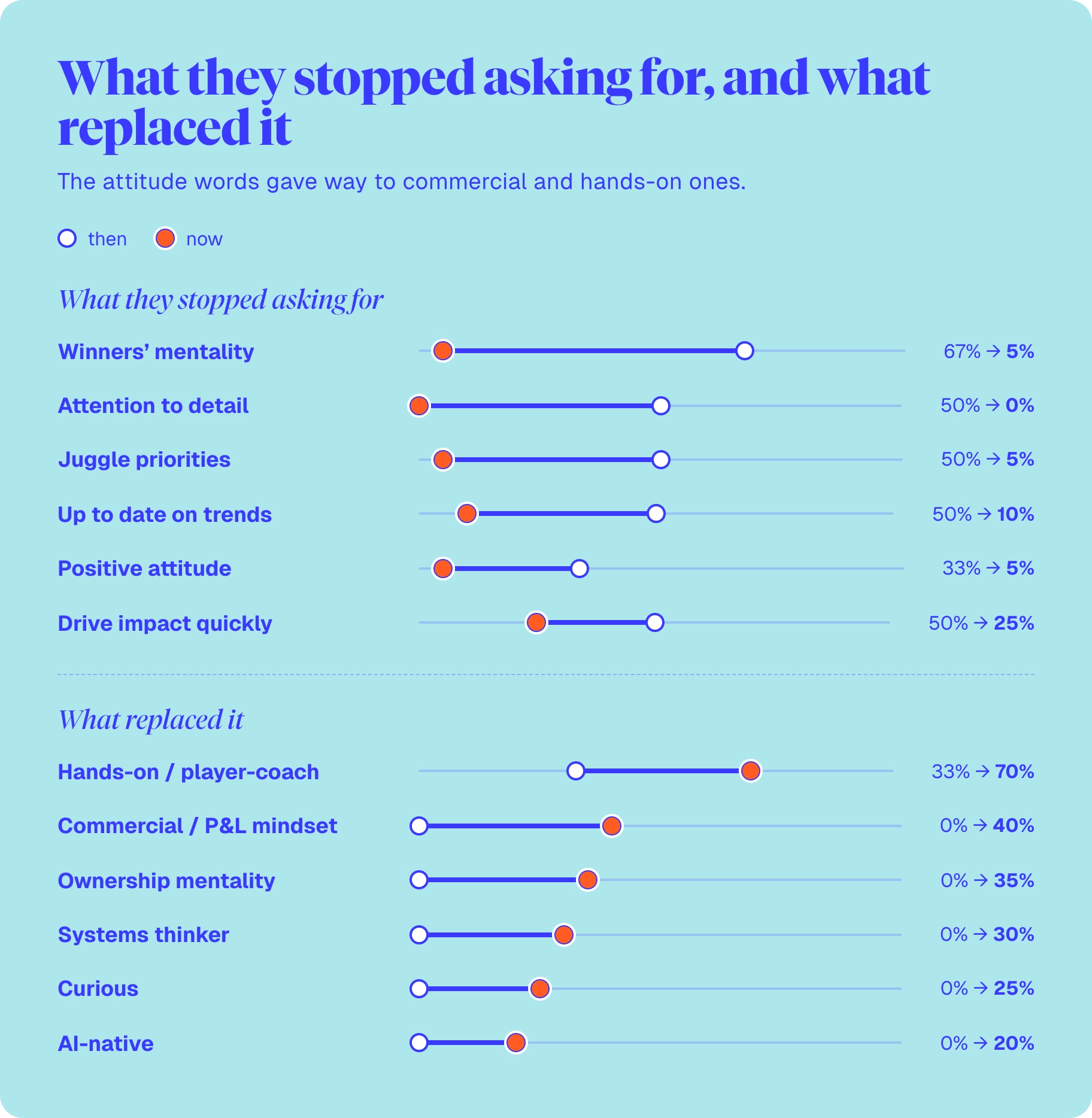
Unsurprisingly, AI-native is increasingly showing up as a hard requirement: it was mentioned in 4 of the 20 jobs I reviewed. This is only going to grow.
One company expected its growth ops function to run at “10x the headcount of a traditional growth team” through agents. Another expected the hire to ship site changes themselves using Claude Code.
So AI-native can also mean more technical. You’re not just expected to plan and own the tests; you may be expected to build them yourself.
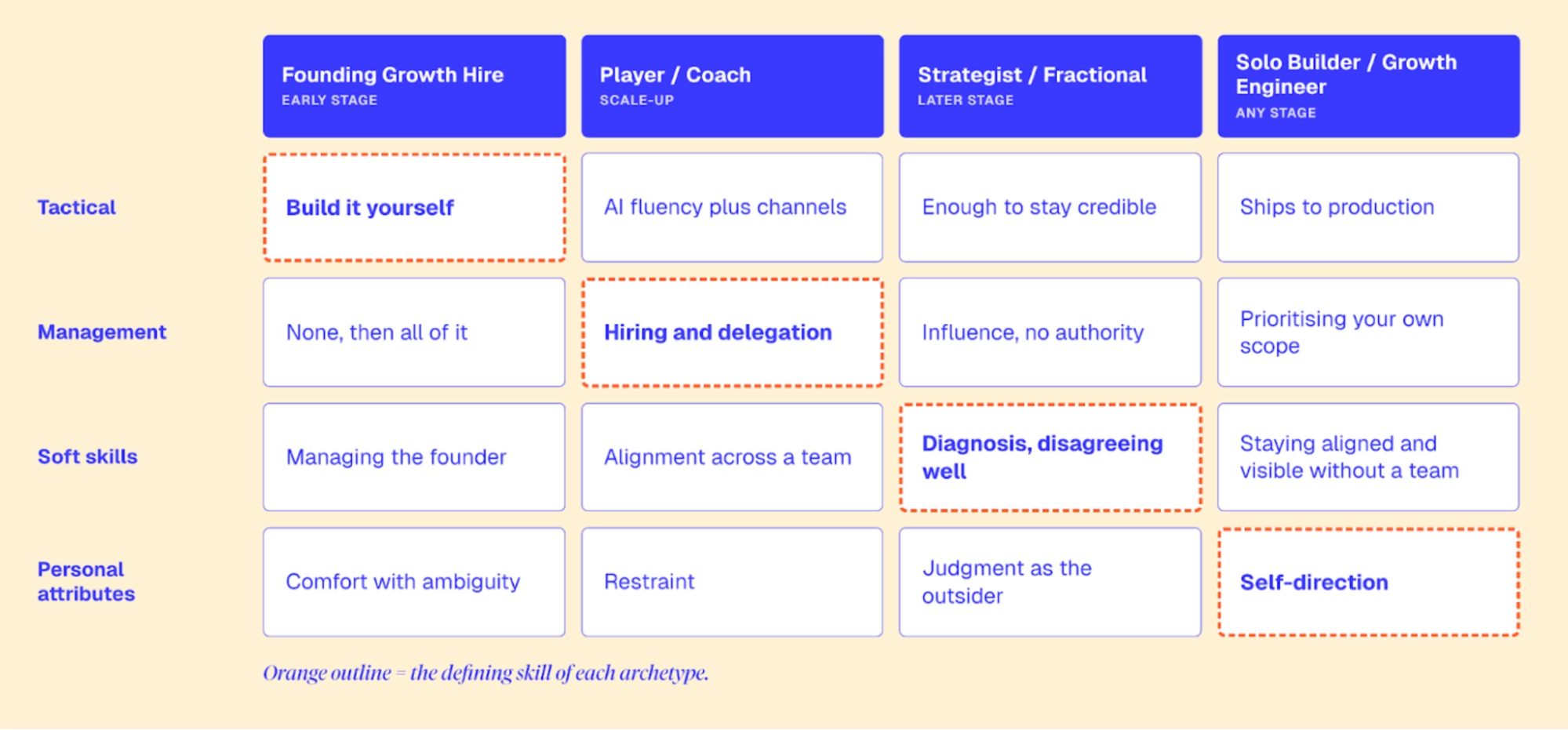
For the less technical among you, please don’t take offense. I mentioned earlier that these roles are diverging. Andrew Capland, a coach for SaaS Heads of Growth, and I explored this in a webinar, where we identified four emerging roles.
The technical, hands-on version is the Senior Solo Builder, or Growth Engineer.
The counterweight is the Hands-on/Player-Coach. This is the less technical role I’m seeing more of, particularly in larger organizations. When moving faster requires better alignment, this person drives it.
There’s also a greater need for ownership, with some roles looking for a Strategist or Fractional Lead: someone who owns the direction but delegates execution. With smaller teams, this is less about managing people and more about providing sound judgment.
Finally, there’s the Founding Growth Hire. To me, this is the least changed of the four: the broad growth role that picks up everything and writes the initial playbook is still much needed for startups.
Put it all together, and the dramatic increase in salary range starts to make sense. Head of Growth isn’t one role anymore. It’s four:
While I analyzed six roles in 2022 (with a more in-depth manual analysis back then), I’ve reviewed hundreds of job specs over the past eleven years. These past few years have had the biggest impact on the role.
The role is getting broader and narrower at the same time: broader in what you’re expected to touch and look at, but narrower in what you actually own. The title may be the same, but what it means can vary dramatically from one organization to another.
Of the four versions, the fourth is the one I’m seeing rise most, and for a CRO specialist, it’s the most interesting. It creates an opportunity to own the full experimentation program.
I’ll dive into that in more depth in a follow-up article.


Written By
Daphne Tideman
Growth Marketing, Direct-to-Consumer (D2C) Growth, Subscription App Optimization +4 more
Growth Marketing, Direct-to-Consumer (D2C) Growth, Subscription App Optimization, Conversion Rate Optimization, User Activation, Paid Social A/B Testing, User Research Recruitment Show less
Edited By
Carmen Apostu