17 Best Privacy-Compliant Website Optimization Platforms


The wild west of website optimization is long over. Today, you need to be privacy compliant or risk million-dollar fines.
If you run a small business, that can feel like walking a tightrope, trying to improve performance while respecting user consent and data laws. Go global with different regional privacy rules, and suddenly you’re juggling knives while walking that same tightrope. The right tools make that balance possible.
This guide rounds up 17 privacy-compliant website optimization platforms for 2026 that help you stay aligned and still grow confidently.
The Privacy Landscape Shaping Website Optimization
Before listing the best tools, here’s the world small businesses are optimizing in. Privacy laws now define how websites can analyze and improve user experiences. The table below highlights the key data protection laws that shape website optimization globally.
| Law | Region | Year Enforced |
Implication for Optimization |
||||||||||||||||||||
|---|---|---|---|---|---|---|---|---|---|---|---|---|---|---|---|---|---|---|---|---|---|---|---|
| GDPR (General Data Protection Regulation) | EU | 2018 | Requires explicit consent before tracking; limits profiling and mandates data minimization. | ||||||||||||||||||||
| CCPA/CPRA (California Consumer Privacy Act/California Privacy Rights Act) | California, US | 2020 / 2023 | Requires notice, opt-out of data sales, and “Do Not Sell My Info” options. | ||||||||||||||||||||
| LGPD (Lei Geral de Proteção de Dados, means: General Data Protection Law) | Brazil | 2020 | Requires consent and transparency similar to GDPR; applies to all online data collection. | ||||||||||||||||||||
| PDPA (Personal Data Protection Act) | Singapore | 2014 / Amended 2020 | Requires organizations to obtain consent before collecting or disclosing personal data; mandates data breach notifications. | ||||||||||||||||||||
| POPIA (Protection of Personal Information Act) | South Africa | 2021 | Limits processing without consent; mandates data subject rights and transparency. | ||||||||||||||||||||
| PIPEDA (Personal Information Protection and Electronic Documents Act) | Canada | 2000 | Requires informed consent and limits data collection to necessary purposes. | ||||||||||||||||||||
| ePrivacy Directive | EU | 2002 / 2009 | Regulates cookie use and online marketing; explicit consent required for non-essential cookies. | ||||||||||||||||||||
| HIPAA (Health Insurance Portability and Accountability Act) | US | 1996 | Governs the collection and use of health-related data. | ||||||||||||||||||||
| UK GDPR & PECR (Privacy and Electronic Communications Regulations) | UK | 2018 / 2003 | Consent required for cookies and marketing; similar to EU GDPR but with UK-specific enforcement. |
Privacy laws have turned optimization into a trust exercise. Every tag, cookie, and test now sits under legal scrutiny all over the world. These frameworks show that users and the governments that represent them demand transparency, consent, and accountability.
Marketers and CRO professionals are dealing with a new reality: privacy regulations like GDPR, CCPA, and LGPD mean every experiment and interaction needs to respect user consent. This has changed how optimization tools collect and process data. First-party insights, anonymization, and transparency are now table stakes.
Dionysia Kontotasiou, Head of Privacy and Integrations at Convert
17 Best Privacy-Compliant Website Optimization Tools
The tools featured here collect only what’s necessary, store data securely, and honor user consent by design. They balance performance with compliance across testing, analytics, feedback, and data governance.
The categories of privacy-compliant optimization tools featured are:
- A/B testing and experimentation platforms: Run controlled tests without compromising user data.
- Analytics tools: Track performance using anonymized, first-party data.
- Session and behavior analysis tools: Understand visitor behavior while keeping identities private.
- User feedback and form tools: Capture user sentiment without invasive tracking.
- Data infrastructure and consent management: Govern consent, cookies, and data storage responsibly.
Quick-Glance Table of Privacy-Compliant Web Optimization Software
| Tool Name | Category | Best For |
Key Privacy Features |
||||||||||||||||||||
|---|---|---|---|---|---|---|---|---|---|---|---|---|---|---|---|---|---|---|---|---|---|---|---|
| Convert | A/B Testing & Experimentation Platforms | Small and medium-sized businesses and enterprises seeking full control of experimentation data and consent. | Supports cookie-free and consent-mode testing; region-specific processing; built on consent-first principles. | ||||||||||||||||||||
| Kameleoon | A/B Testing & Experimentation Platforms | Mid-sized to enterprise organisations in regulated industries with stringent data-protection obligations. | Supports flexible consent policies; ISO 27001 & SOC 2 certified; anonymous browsing data by default. | ||||||||||||||||||||
| VWO | A/B Testing & Experimentation Platforms | Small, mid-size, and enterprise teams who want testing and personalisation while maintaining strong compliance. | Session-recording features include anonymization, hosting data securely, and multiple compliance frameworks. | ||||||||||||||||||||
| Varify.io | A/B Testing & Experimentation Platforms | Small to mid-sized ecommerce and SaaS businesses operating within the EU or with significant EU visitor traffic. | German-based; claims no personal data storage; hosts infrastructure in Germany; GDPR-compliant. | ||||||||||||||||||||
| Matomo Analytics | Privacy-First Analytics Tools | Small to mid-sized ecommerce, SaaS, and other online service businesses that want full control of analytics data. | Open-source; supports cookieless tracking; hosting choice; built-in GDPR tools. | ||||||||||||||||||||
| Fathom Analytics | Privacy-First Analytics Tools | Small to mid-sized websites and online businesses that want strong visitor privacy and minimal compliance complexity. | Minimal tracking, pseudo-anonymous by default; regional hosting; designed for GDPR/CCPA compliance. | ||||||||||||||||||||
| Plausible Analytics | Privacy-First Analytics Tools | Small to mid-sized websites looking to balance analytics performance and compliance in regions with stringent privacy laws. | Cookie-free tracking; no personal identifiers; hosted in the EU, and self-hosting option. | ||||||||||||||||||||
| Umami Analytics | Privacy-First Analytics Tools | Small to mid-sized websites, content-focused organisations, or SaaS brands that need analytics without heavy compliance burden. | Open-source; no cookies by default; self-host or choose jurisdiction; minimal tracking. | ||||||||||||||||||||
| OpenReplay | Session & Behaviour Analysis Tools | Small to mid-size product and ecommerce teams needing session replay with compliance | Open-source, self-hosted, SOC 2 Type II, full data ownership and masking | ||||||||||||||||||||
| Hotjar | Session & Behaviour Analysis Tools | Small to large websites and ecommerce or SaaS teams that want visual analytics with strong privacy guardrails. | Suppresses keystrokes, stores data in the AWS EU region, holds ISO certifications, and aligns with GDPR/CCPA. | ||||||||||||||||||||
| Smartlook | Session & Behaviour Analysis Tools | Small to mid-sized product teams or ecommerce sites that want visual analytics yet strong control over visitor data. | Masking & selective exclusion; SOC 2 Type II certified; privacy-by-design architecture. | ||||||||||||||||||||
| BlockSurvey | User Feedback & Form Tools | Small to mid-sized organisations in sectors handling sensitive data (e.g., HR, healthcare, research) that need encryption and strong data ownership. | End-to-end encryption; no third-party tracking; claims GDPR, HIPAA, ISO-27001 compliance. | ||||||||||||||||||||
| Formbricks | User Feedback & Form Tools | Small to mid-sized organisations and enterprise groups that need privacy-compliant survey or feedback tools and operate in regulated regions. | Self-host or EU-cloud; minimal data collection; GDPR & CCPA compliant; open-source architecture. | ||||||||||||||||||||
| Survicate | User Feedback & Form Tools | Small to mid-sized businesses and larger organisations looking for a feedback platform that aligns with strict regulatory needs. | Allows anonymous surveys; AWS Ireland hosting; ISO-27001 certified; GDPR/CCPA/HIPAA compliance. | ||||||||||||||||||||
| CookieYes | Data Infrastructure & Consent Management | Small to mid-sized websites and ecommerce operations that need a solid CMP for multi-jurisdiction traffic and global privacy laws. | Customisable consent banners; logs minimal data; supports major laws (GDPR, CCPA, LGPD, POPIA); blocks scripts until consent. | ||||||||||||||||||||
| Enzuzo | Data Infrastructure & Consent Management | Google-certified CMP, DSAR workflows, multi-region compliance, auto script-blocking | Small to mid-size ecommerce and SaaS sites wanting scalable consent tools | ||||||||||||||||||||
| Osano | Data Infrastructure & Consent Management | Small to mid-sized organisations and international brands that need a centralised platform for consent, data governance, and global compliance. | Supports 50+ laws; audit logs; multi-region deployment; “Privacy-by-Design” product architecture. |
Learn More: 28 Must-Have CRO Tools for 2026
Privacy-Compliant A/B Testing and Experimentation Platforms
1. Convert

Convert is a privacy-first A/B testing and personalization platform that lets businesses run experiments without sacrificing compliance. It supports both cookieless and consent-mode testing, giving users full control over when and how data is collected.
Privacy Snapshot:
- Data handling and consent management: Supports cookie-free testing via BYOID (Bring Your Own ID) API and two consent modes: Immediate Experience Delivery (smooth UX and delayed data) and Full Privacy Protection (strict consent enforcement).
- Data storage and residency: Uses Akamai CDN and provides region-specific data processing and consent requirements using geolocation (e.g., GDPR in the EU, CCPA in California).
- Certifications and legal compliance: Enables server-side allocation, data anonymization, and first-party data control. Convert is fully compliant with global privacy laws, including GDPR, CCPA, and LGPD.
- Privacy by design: Built around consent-first principles, no third-party data sharing, and transparent, privacy-safe data flows.
Best For: Small and medium-sized businesses and enterprises seeking full control of experimentation data and consent.
2. Kameleoon

Kameleoon is an experimentation and personalization platform designed for testing, segmentation, and optimization. It enables businesses to test, personalize, and optimize while built around compliant data-handling practices.
Privacy Snapshot:
- Data handling and consent management: Supports flexible consent policies (active, delayed, or blocked modes) to match legal requirements and user experience.
- Data storage and residency: Data is encrypted in transit (TLS 1.2+) and at rest (AES256). Dedicated infrastructure isolates client tenants and restricts access.
- Certifications and legal compliance: Holds ISO 27001 and SOC 2 certifications. Fully compliant with GDPR, CCPA, and HIPAA; supports PCI DSS in payment-funnel contexts.
- Privacy by design: By default, it uses anonymous browsing data and integrates with IAB Europe’s TCF (v2.0) for granular consent control.
Best For: Mid-sized to enterprise organizations in regulated industries with stringent data protection obligations.
3. VWO

VWO is an experimentation and optimization platform built with a focus on privacy, offering powerful testing, personalization, and analytics tools while integrating strong data protection measures.
Privacy Snapshot:
- Data handling and consent management: VWO’s session-recording and analytics features include default anonymization of key presses, options to whitelist/blacklist specific inputs, and a “Do Not Track” mode.
- Data storage and residency: VWO hosts data in secure cloud environments, segregates customer data logically, and implements encryption in transit (TLS 1.2+) and at rest (AES-256).
- Certifications and legal compliance: VWO maintains formal certifications for ISO 27001, ISO 27701, SOC 2 Type II, PCI DSS, and publicly acknowledges compliance with GDPR, CCPA, HIPAA, and other frameworks.
- Privacy by design: VWO says it embeds privacy into its product development lifecycle via a Security Development Lifecycle (SDL) and publishes a clear privacy policy and privacy-management principles.
Best For: Small, mid-size, and enterprise teams who want testing and personalization while maintaining strong compliance controls and visitor privacy.
4. Varify.io
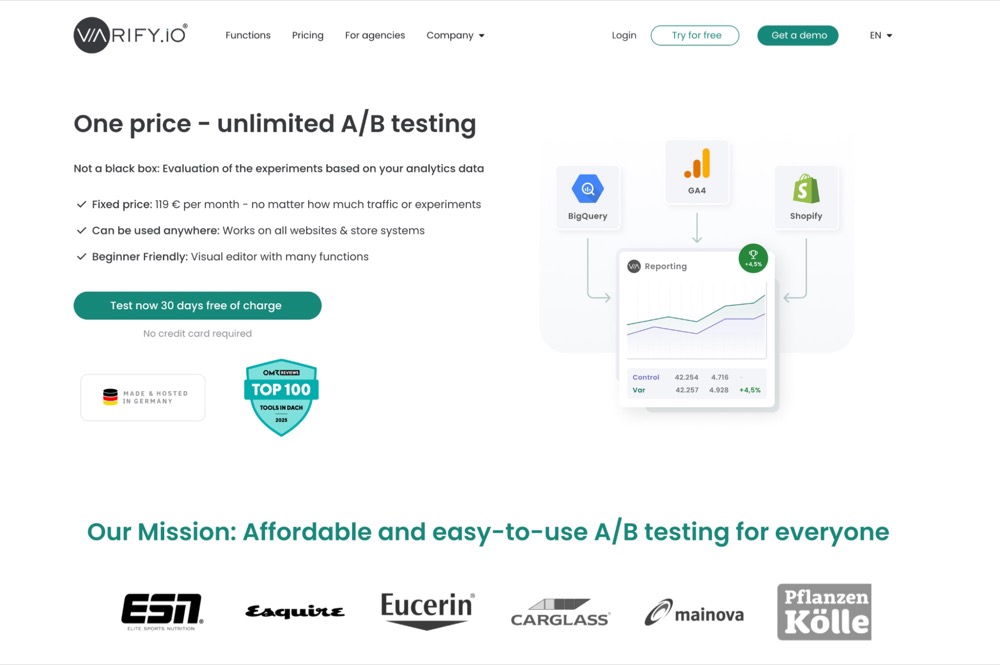
Varify.io is a flat-rate A/B testing and optimization platform designed with privacy at its core. It allows businesses to run unlimited experiments under one fixed price and emphasizes minimal tracking and data collection.
Privacy Snapshot:
- Data handling and consent management: Varify states that it does not store any personal data. Participants in experiments are not tagged with personal IDs, and no third-party cookies are set by default.
- Data storage and residency: The company is headquartered in Germany and hosts its infrastructure on AWS servers in Germany, so data remains under EU jurisdiction.
- Certifications and legal compliance: Provides a Data Processing Addendum (DPA) consistent with GDPR requirements, and openly states that the processing is conducted under the lawful bases defined in art. 6 GDPR.
- Privacy by design: The architecture uses local or session storage instead of cookies for test-variant assignment, further reducing tracking footprint.
Best For: Small ecommerce and SaaS businesses operating within the EU or with significant EU visitor traffic that want to run tests.
Privacy-First Analytics Tools
1. Matomo
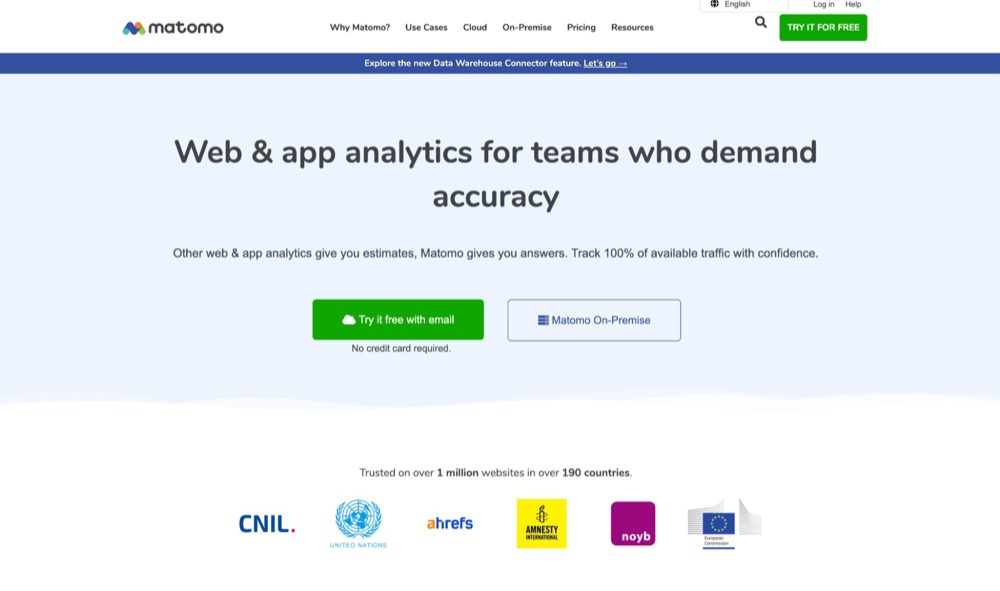
Matomo Analytics is an open-source web analytics platform built around data ownership and transparency. You can self-host it or use the cloud version, giving you full control over data collection, processing and storage.
Privacy Snapshot:
- Data handling and consent management: Matomo supports cookieless tracking, IP anonymization, and can be configured to run only after consent.
- Data storage and residency: With the cloud version, you can choose where data is hosted (e.g., AWS EU servers), and the self-hosted option means you retain full control.
- Certifications and legal compliance: Matomo offers built-in GDPR tools, guides on processors/sub-processors, and compliance workflows for multiple laws.
- Privacy by design: The platform emphasizes user data control, minimizes tracking, does not allow external profiling by default, and offers settings for anonymization and consent layering.
Best For: Small to mid-sized ecommerce, SaaS, and other online service businesses that want full control of analytics data.
2. Fathom Analytics
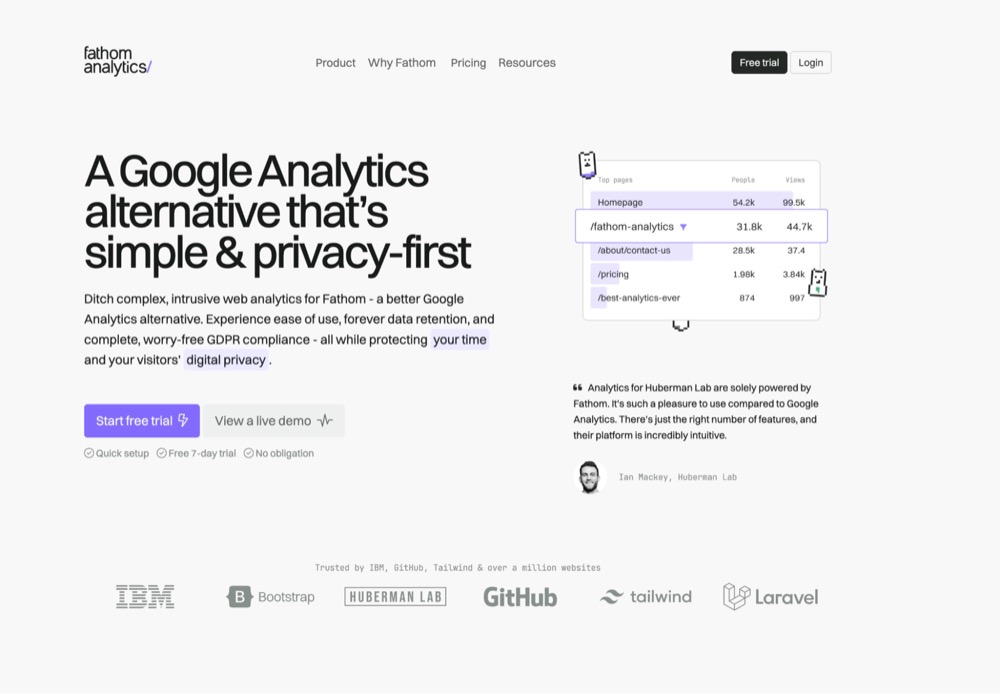
Fathom Analytics is a privacy-first web analytics platform designed to provide essential website insights without compromising user data rights. It prioritises simplicity, minimal tracking, and full control for site owners.
Privacy Snapshot:
- Data handling and consent management: Built around data minimization and pseudo-anonymization. Fathom processes only essential visitor data, supports cookieless tracking, and offers “EU Isolation” so European visitor data remains within EU servers.
- Data storage and residency: Gives users regional hosting options and retains full ownership of analytics data. They clearly state they don’t sell or share your site data with third parties.
- Certifications and legal compliance: Designed to meet GDPR and CCPA compliance out of the box, with features like pseudo-anonymous tracking and simplified audit readiness.
- Privacy by design: Cookie-free by default for many sites, light-weight script setup, and clear messaging about fewer headaches for consent compliance.
Best For: Small to mid-sized websites and online businesses that want strong visitor privacy and minimal compliance complexity.
3. Plausible Analytics
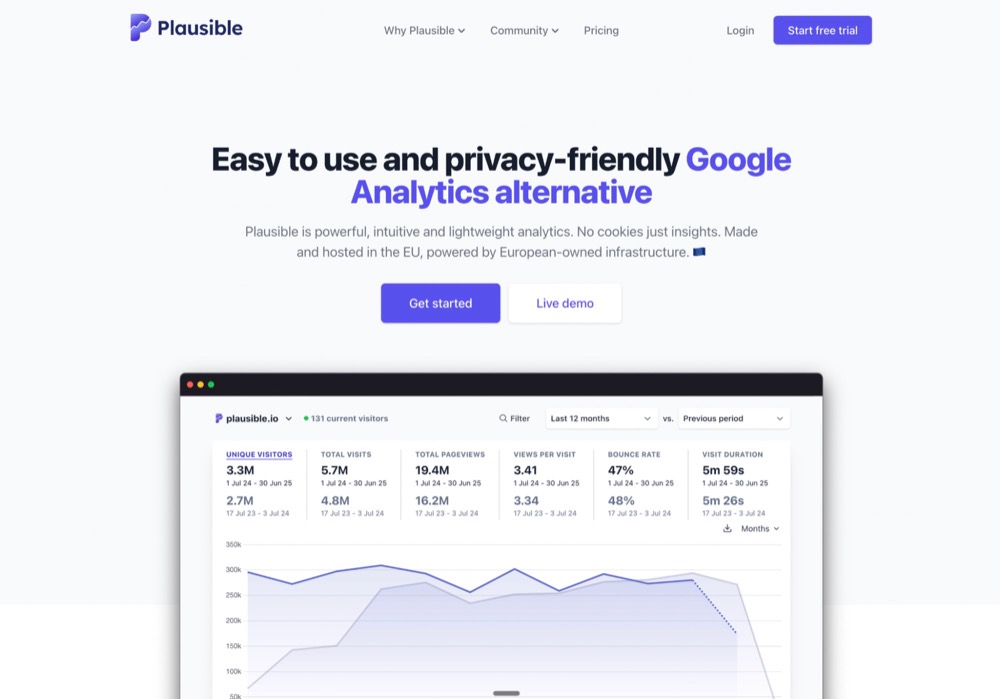
Plausible Analytics is a lightweight, privacy-first web analytics platform built for simplicity and compliance. It avoids cookies altogether, collects only aggregated data, and gives you the essential insights you need without placing user privacy at risk.
Privacy Snapshot:
- Data handling and consent management: Uses cookie-free tracking, processes no personal identifiers, and aggregates data so individual users cannot be tracked or profiled.
- Data storage and residency: Hosted in the EU and built on European-owned infrastructure; self-hosting option available for full data control.
- Certifications and legal compliance: Designed to comply with GDPR, CCPA, and PECR by default. No complex consent banner needed since no persistent identifiers are used.
- Privacy by design: All data collection is limited to the minimum necessary metrics (like page views, browser, and device type) and avoids cookies or local storage for persistent user tracking.
Best For: Small to mid-sized websites looking to balance analytics performance and compliance in regions with stringent privacy laws.
4. Umami

Umami Analytics is an open-source, privacy-focused web analytics platform built to deliver essential insights without invasive tracking or cookie dependencies.
Privacy Snapshot:
- Data handling and consent management: No cookies by default, no cross-site tracking, no personal identifiers. Visitor data is anonymized and aggregated.
- Data storage and residency: Users can self-host for full control or use Umami’s cloud option. Data hosting in jurisdictions of choice allows compliance with regional data laws.
- Certifications and legal compliance: Built from the ground up to respect GDPR, CCPA, and related data-protection frameworks via minimal data collection and user-centric design.
- Privacy by design: Lightweight tracking script (≈2 KB), minimal setup, focus on essential metrics. It’s designed for performance and user control.
Best For: Small to mid-sized websites, content-focused organisations, or SaaS brands that need analytics without heavy compliance burden.
Session and Behavior Analysis Tools With Built-In Privacy
1. OpenReplay
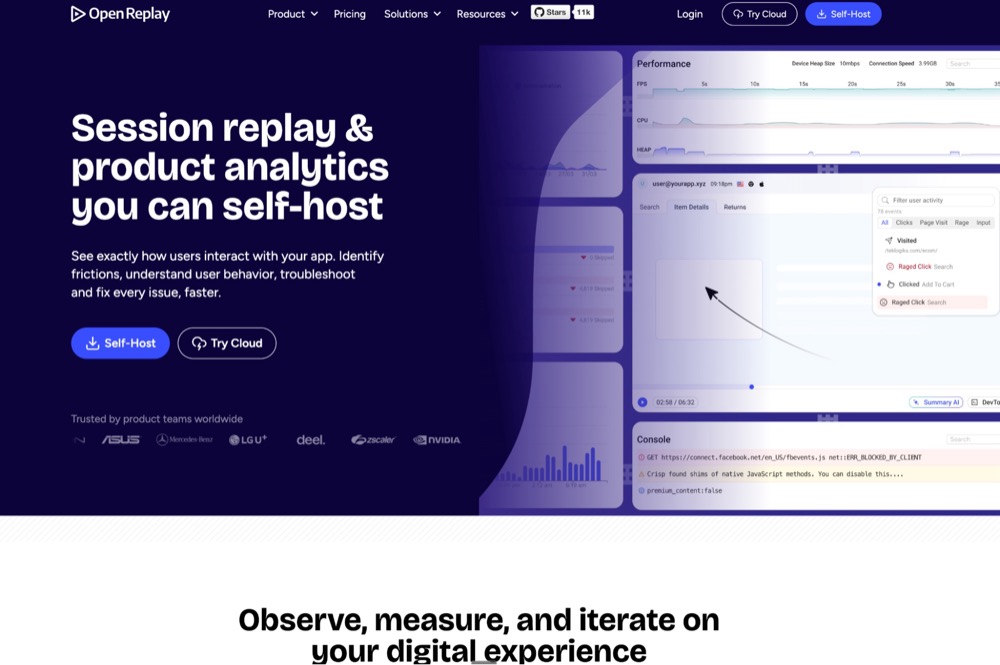
OpenReplay is an open-source session-replay and product analytics platform that helps teams visualize user journeys while keeping complete control over their data. Designed with a privacy-first mindset, it lets you self-host or choose compliant cloud regions to meet strict data-protection requirements.
Privacy Snapshot:
- Data handling and consent management: Provides granular control over what’s recorded through masking and exclusion rules. You can choose what elements to capture, obscure, or ignore entirely.
- Data storage and residency: Fully self-hostable, letting you pick the storage region and cloud provider (AWS, GCP, Azure, etc.). This flexibility ensures alignment with GDPR, CCPA, and local data-residency regulations.
- Certifications and legal compliance: SOC 2 Type II compliant. Offers full audit logs, encryption in transit and at rest, and gives customers control of data-processing agreements and deletion policies.
- Privacy by design: Engineered around the principle of total data ownership. All captured sessions stay within your infrastructure when self-hosted. Privacy features such as selective data masking and configurable capture APIs are built into the core product.
Best For: Small to mid-sized product and ecommerce teams that want advanced session-replay insights without compromising on privacy or control.
2. Hotjar
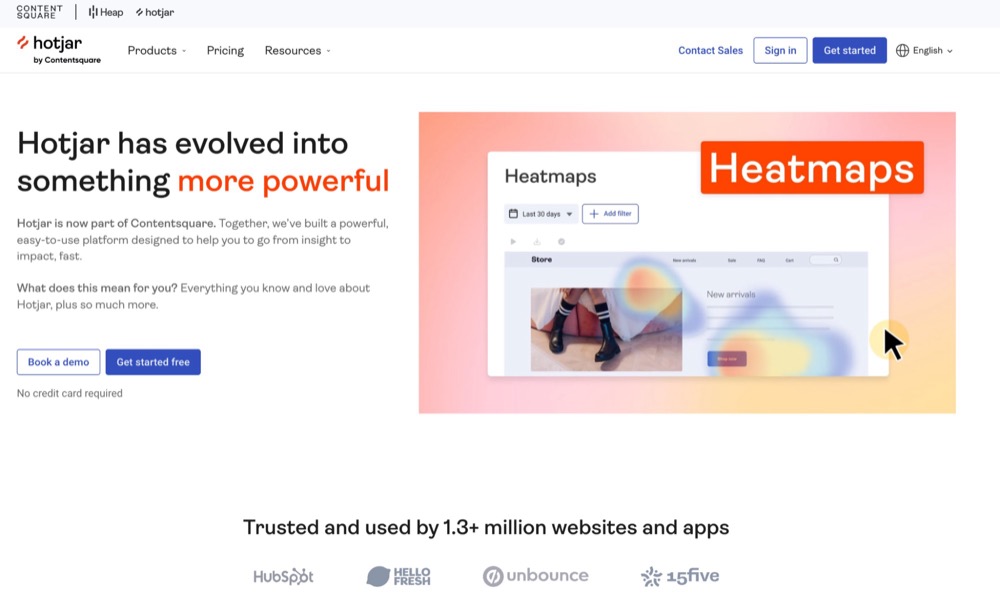
Hotjar offers session replay, heatmaps, feedback polls, and forms to help understand user behavior. Built to support privacy-aware insights, its design emphasises minimal personal data exposure and robust controls for user rights.
Privacy Snapshot:
- Data handling and consent management: Hotjar suppresses keystrokes on input fields by default and uses unique visitor identifiers rather than IPs in recordings. It requires the site owner to obtain appropriate visitor consent before activation when operating in stricter privacy jurisdictions.
- Data storage and residency: User data is stored in Amazon Web Services’ EU region (Ireland) by default, with access controls and encryption in place.
- Certifications and legal compliance: Hotjar holds standards such as ISO 27001, ISO 27701, ISO 27017 & ISO 27018, and publicly states compliance with GDPR, CCPA, and LGPD.
- Privacy by design: According to Hotjar, the platform is built to operate with “privacy in mind” (particularly focusing on anonymized data capture, visitor opt-out mechanisms, and suppression of sensitive text).
Best For: Small to large websites and ecommerce or SaaS teams that want visual analytics with strong privacy guardrails.
3. Smartlook
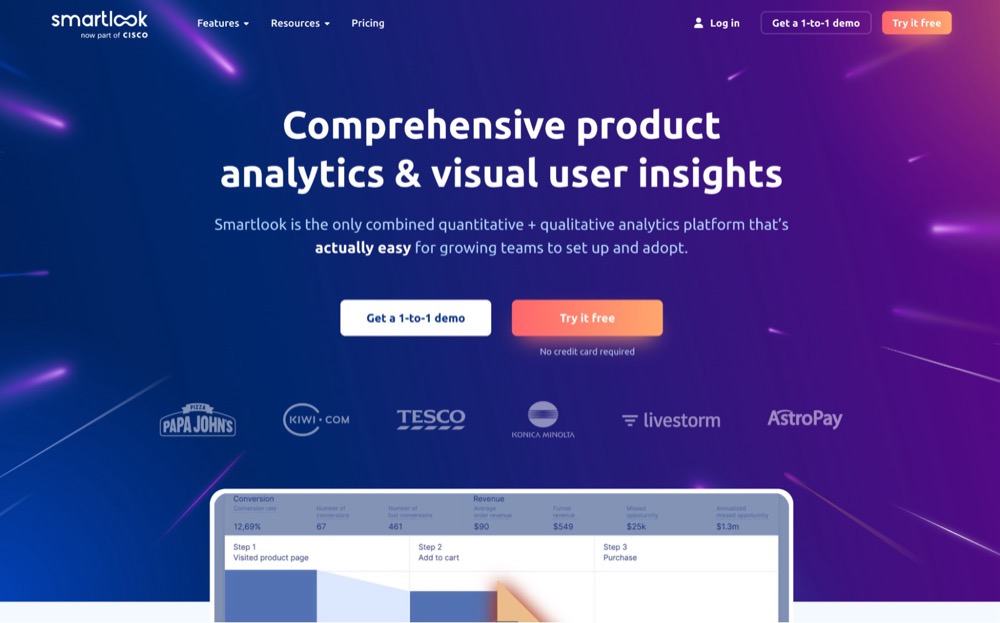
Smartlook is a session-recording and user-behavior analytics platform built for visibility into user interactions (think: clicks, scrolls, taps) while offering robust tools to mask or omit sensitive data to respect privacy.
Privacy Snapshot:
- Data handling and consent management: Smartlook offers native masking and selective-element exclusion to reduce exposure of personal or sensitive data. For example, the SDK supports a “wireframe rendering” mode that strips UI details entirely and masks APIs to protect key fields.
- Data storage and residency: The platform maintains encryption in transit and at rest. Their public commitment says, “We take privacy and security seriously.”
- Certifications and legal compliance: Smartlook has achieved SOC 2 Type II certification and emphasises its “privacy-by-design” foundation.
- Privacy by design: By default, it never records keystrokes in hidden fields, offers rendering modes to obscure sensitive visuals, and enables filtering of what gets captured in a session.
Best For: Small to mid-sized product teams or ecommerce sites that want visual analytics yet need strong control of what visitor data is captured and how it’s stored.
User Feedback and Form Tools That Respect Privacy
1. BlockSurvey
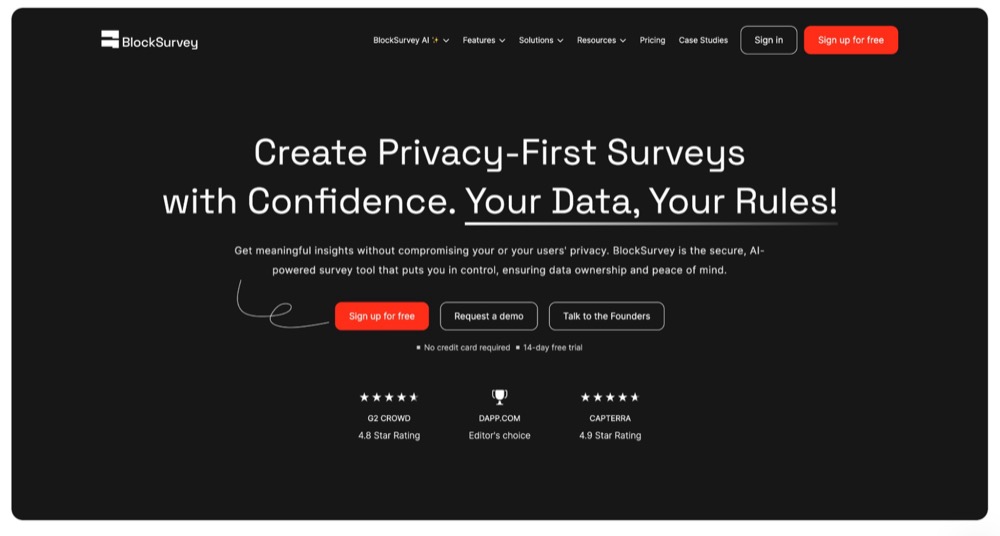
BlockSurvey is a survey and form-building platform engineered for privacy-first data collection. It emphasises respondent anonymity and owner control, with features like end-to-end encryption and no third-party tracking.
Privacy Snapshot:
- Data handling and consent management: Uses end-to-end encryption such that only the survey creator can access responses. Explicitly prevents platform or third-party access.
- Data storage and residency: Responses are encrypted both in transit and at rest. The platform supports anonymous surveys and offers a zero-knowledge architecture for heightened control.
- Certifications and legal compliance: Claims compliance with GDPR, HIPAA, SOC 2, and ISO 27001 standards.
- Privacy by design: No cookies or tracking scripts by default. Surveys can be fully anonymous. The platform markets itself as “no ads, no tracking” to protect respondent identity.
Best For: Small to mid-sized organizations in sectors handling sensitive data that need survey and form tools with stringent consent and strong encryption.
2. Formbricks
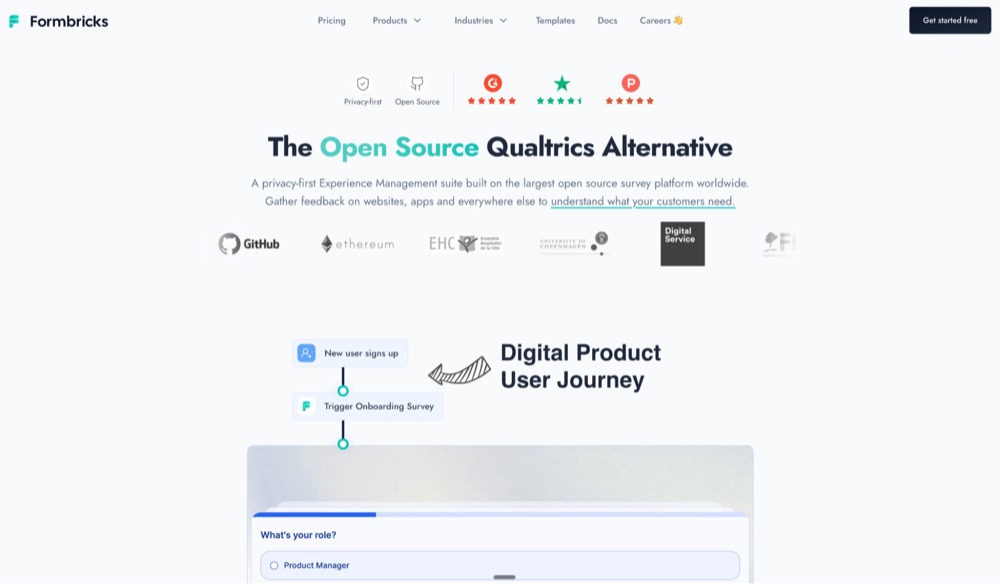
Formbricks is an open-source, privacy-first experience-management platform built for surveys and forms. It emphasizes self-hosting or EU-cloud hosting, giving organizations complete control over data.
Privacy Snapshot:
- Data handling and consent management: Formbricks positions itself as “private by design, secure by default”. Its architecture treats the survey-creator as the data controller, and Formbricks acts as the processor, so your respondent data remains under your control.
- Data storage and residency: The managed cloud version stores data in Germany (EU). There is also a self-host option (Docker-ready) for complete data sovereignty.
- Certifications and legal compliance: Specifically states GDPR and CCPA compliance (self-hosting may require your own audit mechanism). It also highlights role-based access control, end-to-end encryption, and “enterprise-grade privacy and security” features.
- Privacy by design: No tracking cookies by default. Emphasizes minimal data collection. Provides tools to help you create your own GDPR-compliant surveys (consent checkboxes and retention policies).
Best For: Small to mid-sized organizations and enterprise groups that need privacy-compliant survey or feedback tools and operate in heavily regulated regions.
3. Survicate

Survicate is a survey and feedback platform designed for collecting actionable user insights while maintaining strong data privacy and compliance credentials. It offers both on-site and email-survey workflows, along with advanced routing and respondent-control features.
Privacy Snapshot:
- Data handling and consent management: Survicate gives you the option to run fully anonymous surveys (no PII collection) or collect personal data only when respondents consent. It provides a Data Processing Agreement and clearly explains its role as both Data Controller and Data Processor depending on how you use the platform.
- Data storage and residency: Data is hosted on AWS in Ireland (EU region) by default. The infrastructure is ISO 27001-certified and built with strong data-segregation and encryption practices.
- Certifications and legal compliance: Survicate states compliance with GDPR, CCPA, HIPAA (via BAA), ISO 27001, and SOC-certified hosting infrastructure.
- Privacy by design: The platform avoids storing persistent cookies for respondent tracking (using only Local Storage when needed), provides explicit respondent rights (access, delete, and export), and offers tools like optional consent checkboxes and visibility into processor/sub-processor arrangements.
Best For: Small to mid-sized businesses and larger organizations looking for a feedback-collection platform that aligns with strict regulatory needs.
Data Infrastructure and Consent Management
1. CookieYes

CookieYes is a consent-management platform (CMP) built to simplify cookie compliance and consent workflows for websites. It automates banner deployment, third-party script blocking, and consent logging.
Privacy Snapshot:
- Consent and preferences: Offers customizable consent banners, geo-targeting to region-specific laws, supports Google Consent Mode v2, and auto-blocks non-essential scripts until consent is given.
- Data minimization and retention: The platform logs minimal data for proof of consent (consent ID, timestamp, and status) and allows exporting consent logs. Retention durations depend on plan (e.g., up to 5 years).
- Residency and storage: CookieYes supports global compliance with regions such as the EU, UK, US, Brazil, and South Africa, and provides geo-targeted banners accordingly.
- Certifications and legal compliance: The tool explicitly supports major privacy laws, including GDPR, CCPA/CPRA, LGPD, POPIA, and integrates with IAB TCF v2.2.
- Privacy by design: Script blocking until consent, built-in policy generators, no tracking of consent status via dark patterns, and automated scans to maintain accurate cookie categories.
Best For: Small to mid-sized websites and ecommerce operations that need a solid consent-management solution built for multi-jurisdiction traffic and global privacy regulations.
2. Enzuzo

Enzuzo is a consent-management and data-privacy platform built for small and mid-sized businesses that need an easy, scalable way to comply with global tracking and data-protection laws.
Privacy Snapshot:
- Consent and preferences: Provides cookie-consent banners, geo-targeted banner rules, consent logs, DSAR (Data Subject Access Request) workflows, and supports Google Consent Mode v2. It automatically detects and blocks non-essential scripts until user consent is obtained.
- Data minimization and retention: The platform minimizes data collected to essential consent records and allows deletion of user data on request. Also automates DSAR fulfillment and offers dashboards for tracking data-retention requests.
- Residency and storage: Offers multi-region compliance (EU, UK, US, Brazil, Canada) and aligns with regional storage and transfer requirements. Multi-domain management allows separate compliance settings per region.
- Certifications and legal compliance: Google-certified Consent Management Platform (CMP) and aligns with GDPR, CCPA/CPRA, LGPD, and Quebec Law 25.
- Privacy by design: Built with privacy as a default, automated scanning, policy generation, and clear user controls make compliance intuitive even for non-technical teams.
Best For: Small to mid-sized eCommerce, SaaS, and content-driven websites that want scalable consent-management and privacy-governance tools.
3. Osano

Osano is a unified data-privacy platform that enables companies to manage consent, preferences, subject-rights, data mapping, and vendor risks all from one hub.
Privacy Snapshot:
- Consent and preferences: Osano supports cookie consent, preference management, and unified consent across channels, with audit logs and regional law coverage for 50+ countries.
- Data minimization and retention: The platform automates consent logging, tracks banner versions and device contexts, and maintains records for audit-readiness.
- Residency and storage: Osano operates in multiple regions, supports global compliance (across 95+ laws), and maintains encrypted storage and integrations for global deployments.
- Certifications and legal compliance: The solution explicitly aligns with major privacy regulations (GDPR, CCPA/CPRA, etc.), provides features such as a “No Fines, No Penalties” guarantee, and integrates with GRC processes.
- Privacy by design: Osano builds consent and privacy into product architecture, from script‐blocking until consent, cookie categorization, to preference portals and accessibility compliance (such as WCAG).
Best For: Small to mid-sized organisations and international brands that need a centralized platform for consent management, data governance, and compliance across multiple jurisdictions.
Why Privacy Compliance Is Non-Negotiable
Data privacy defines who has access to data, while data protection ensures that no one else can access or misuse it; ignoring either opens the door to compliance violations, breaches, and loss of customer trust.
Failing to prioritize both data privacy and data protection is like locking your front door but handing out copies of the key; sooner or later, someone you did not authorize will walk in.
Kezeah Niere, Head of Legal, Compliance, and Data Privacy at Convert
It boils down to this: you can’t pick and choose. Whether you’re running A/B tests, tracking sessions, or handling customer data, overlooking privacy or protection leaves you exposed.
1. The financial risk is real.
Regulators don’t hand out warnings anymore. They’re handing out fines.
- The GDPR enforcement tracker reports over €5.65 billion in fines from 2018 to March 2025, covering 2,245+ penalties.
- In 2025 alone, more than €3 billion in GDPR penalties were issued within the first half of the year.
- And it isn’t targeted at tech giants alone. Regulators are increasingly turning their gaze to SMEs and mid-market businesses too.
Put simply, skipping privacy or protection is disastrously expensive for small businesses.
2. Reputation and trust matter more than ever.
Even if a company avoids a fine, the fallout from a data incident or non-compliant tracking scheme can destroy brand trust overnight. When users feel their data is mishandled, they walk away. A tool that collects everything but doesn’t respect consent is a ticking time bomb.
3. Privacy and protection aren’t the same; you need both.
As Kezeah said, data privacy is about who has access, while data protection is about how safe the data is. You could lock every door (protection), but hand keys out to every visitor (privacy disaster).
Many GDPR fines stem not just from lax security but also from failing to obtain valid consent, misusing data, or lacking transparency, as regulatory focus now extends to the entire data lifecycle (collection, purpose, retention, and deletion), not just securing the server room.
4. Privacy is performance
Here’s the twist: privacy compliance doesn’t hamper experimentation. If you build your optimization stack on consent-respecting, first-party data architectures, you’re laying the groundwork for long-term, scalable growth.
The best optimization agencies and platforms know this. They’re blending protection and privacy to power smarter tests and better insights.
You don’t have to choose between conversion and compliance. Choose a platform that lets you have both.
What “Privacy-Compliant” Means in 2026
Achieving privacy compliance in 2026 signals a full operational mindset, where data collection, processing, and insight generation are only valid if they respect user rights, reflect global law, and build trust.
Here are the five attributes that define true privacy-compliance in 2026:
- First-party or cookie-free tracking. You’re not relying on third-party cookies; rather, you use lighter, consent-friendly tracking scripts.
- Explicit, audit-ready consent. You’re logging who said yes or no, when, and how it ties to data processing.
- Data minimization and anonymization. You’re collecting only what you need, anonymising or deleting it when done.
- Regional data residency and sovereignty. You’re storing and processing data in regions aligned with applicable laws.
- Privacy-by-design architecture. You’re building systems where privacy is baked in, not tacked on later.
When your optimisation stack is built on these principles, you get two outcomes: better insights and sustainable trust. And a bonus outcome: No fear of regulators catching up to you, AKA peace of mind.
Why Convert Leads in Privacy-Compliant Optimization
Convert builds privacy into every layer of experimentation. It’s a core principle in how the experimentation platform works.
1. Cookieless Testing and Consent-Based Experimentation
Convert offers two privacy-compliant testing models aligned with GDPR, CCPA, and similar laws:
- Cookie-less testing: Run experiments without browser cookies using the BYOID (Bring Your Own ID) API. Identify visitors with your own first-party data (user IDs, customer IDs, and/or device identifiers) and maintain consistency even when cookies are blocked.
- Consent mode testing: Control when experiments and data collection begin.
- Immediate Experience Delivery – tests appear instantly; data waits for consent.
- Full Privacy Protection – blocks all experiments and data until explicit consent is granted.
Both modes ensure lawful data handling while maintaining experiment accuracy.
2. Region-Specific Consent Enforcement
Convert uses Akamai CDN to apply geo-targeted consent rules. This lets users automatically enforce GDPR, CCPA, or other regional policies without custom scripts, keeping consent behavior aligned with local regulations.
3. Transparent Data Handling
Convert anonymizes visitor data and never shares it with third parties.
- Server-side allocation keeps data within your infrastructure.
- Anonymization removes personal identifiers.
- Audit-ready logs document every consent and data action.
4. Privacy Without Performance Loss
Convert’s tracking script is lightweight and configurable:
- Base script: ~50 kB
- Load impact: ~100 ms
- Experience processing: ~200 ms
Choose your trade-off:
- Synchronous loading: Zero flicker, consistent UX, and moderate Core Web Vitals impact.
- Asynchronous loading: Faster pages and minor flicker risk.
This balance keeps both privacy and performance intact.
5. Compliance Built In
Convert complies with global privacy laws and supports consent-based testing, regional enforcement, and first-party identifiers.
It helps teams test responsibly, prove compliance, and protect user trust while maintaining reliable data.
How to Choose the Right Privacy-Compliant Optimization Tool
There’s no one-size-fits-all solution for balancing growth and compliance. The right tool depends on what data you collect, how you process it, and who you serve. Here’s a straightforward way to decide:
1. Match the Tool to Your Data Footprint
If you’re collecting only basic behavioral data, a privacy-first analytics tool like Plausible or Fathom may be enough.
If you’re running experiments or personalizations, you’ll need a platform with consent logic and cookie-free options like Convert or Kameleoon.
The more data you handle, the more you should look for anonymization, audit logs, and configurable retention.
Prioritize tools that help you shift toward first-party and zero-party data, i.e., data your users willingly share or that you own directly. It’s safer, compliant by design, and builds long-term trust.
2. Prioritize Regional Compliance
Where your visitors live matters more than where your company is registered. Make sure the tool you pick supports regional data storage (EU, US, APAC) and adjusts consent flows for local laws.
Geo-targeted consent management, as offered by CookieYes, Osano, or Enzuzo, saves time and reduces legal risk.
Make sure you ask if the tool supports data sovereignty (the ability to store data within the same region it’s collected). This is now a core expectation under most privacy frameworks.
3. Look For Transparency
Ignore buzzwords like “GDPR-ready.” Instead, check:
- Is there a published privacy policy that names data processors and storage regions?
- Do they provide a Data Processing Addendum?
- Can you view or export consent logs for audits?
If any of that’s unclear, move on. Valid consent must be freely given, specific, informed, and reversible. The best tools document this automatically and provide logs you can show to auditors (if it ever comes to that).
4. Evaluate Data Control Options
The safest tools let you self-host or choose where your data lives. Platforms like Matomo, Umami, and Formbricks give you full control over hosting and retention, which is ideal for regulated industries or cautious clients.
If you’re using a managed platform, confirm that it provides data minimization (collects only what’s necessary) and retention policies (automatically deletes old data).
5. Consider Your Team’s Capacity
A fully self-hosted solution offers maximum control but needs technical setup. If you don’t have a developer or legal specialist in-house, pick a managed solution with automated compliance (e.g., Convert or Enzuzo).
Managed platforms with auto-updated legal templates, policy generators, and consent dashboards can save smaller teams hours of manual work each month.
6. Verify Certifications and Audits
Trust but verify. Look for recognized standards like ISO 27001, SOC 2 Type II, or Google-certified CMP status. These show the vendor has undergone third-party scrutiny, something every privacy-first stack should prove.
You can also check whether the tool offers audit logs, incident reporting, and independent penetration testing. These are small signs of real maturity in data protection.
In short: Start with your risk level, confirm regional compliance, and choose a tool that matches your technical and legal readiness.
The Future of Privacy and Optimization
In 2026 and beyond, privacy and experimentation are working together. For marketers, that means your optimization stack must evolve in three key ways:
- First-party data and AI-led insights will dominate. Companies are shifting toward first-party or zero-party data and using AI to extract meaningful signals without compromising privacy.
- Tracking moves toward the server. Server-side and clean-room data models are taking over, helping you preserve accuracy and compliance simultaneously.
- Privacy becomes a growth lever. Rather than a cost or constraint, privacy compliance is now a competitive advantage as brands that embed trust earn attention, loyalty, and data access.
What this means for your strategy:
- You’ll need tools built for cookie-free experimentation, consent-aware tracking, and regional data control.
- Your internal team must shift from quarterly tests to continuous adaptation: privacy-ready, agile, and transparent.
- User trust becomes a KPI. Every experiment should leave the visitor better off, not just give your numbers a bump.
FAQ About Privacy-Compliant Website Optimization Tools
1. What does “privacy-compliant website optimization software” mean?
Privacy-compliant website optimization software refers to tools that respect user consent, collect only first-party data, and comply with major privacy laws like GDPR, CCPA, and LGPD. They enable A/B testing and analytics without intrusive third-party tracking.
2. Why is privacy compliance important for website optimization?
Ensuring your optimization tools follow privacy rules means your data collection is both legal and user-friendly. It guards your business from regulatory fines and builds the trust required for better conversion performance and sustained growth.
3. Which privacy laws affect website analytics and optimization?
Key laws include GDPR (EU), CCPA (California), LGPD (Brazil), POPIA (South Africa), and HIPAA (US healthcare). These laws mandate user consent, transparency in tracking, and limit how data is used or shared.
4. What happens if my optimization tool doesn’t comply with privacy laws like GDPR or CCPA?
Failing to comply can lead to steep penalties, up to €20 million or 4% of global revenue under GDPR, plus exclusion from advertising ecosystems or loss of user trust.
5. How can small businesses stay compliant while optimizing their websites?
Small businesses should adopt first-party or cookie-free solutions, activate consent-mode testing, and select tools that offer data-residency options and clear processing transparency. Minimal data collection and simple audits help too.
6. What are the best privacy-compliant A/B testing tools?
Leading options include Convert, Kameleoon, and Varify.io. Among them, Convert stands out for relying exclusively on first-party data and offering built-in consent mode and cookieless testing.


Written By
Uwemedimo Usa
Edited By
Carmen Apostu